
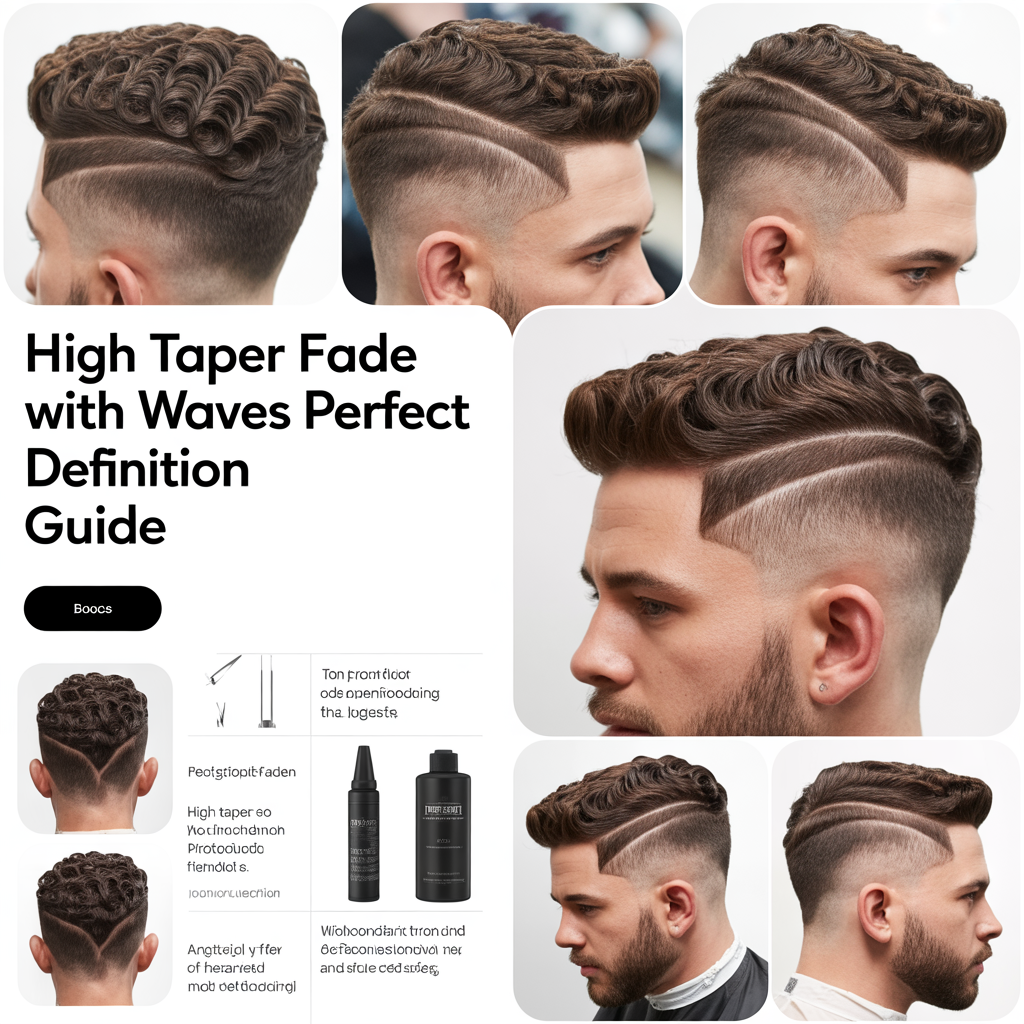
Combining a high taper fade with waves creates one of the most sought-after hairstyles in modern men’s grooming. This sophisticated look merges the clean, graduated precision of a taper fade with the textured elegance of wave patterns, resulting in a style that’s both sharp and culturally significant. Whether you’re starting your wave journey or perfecting your pattern, understanding how to balance these two elements is essential for achieving that crisp, defined look.
High Taper Fade with Waves
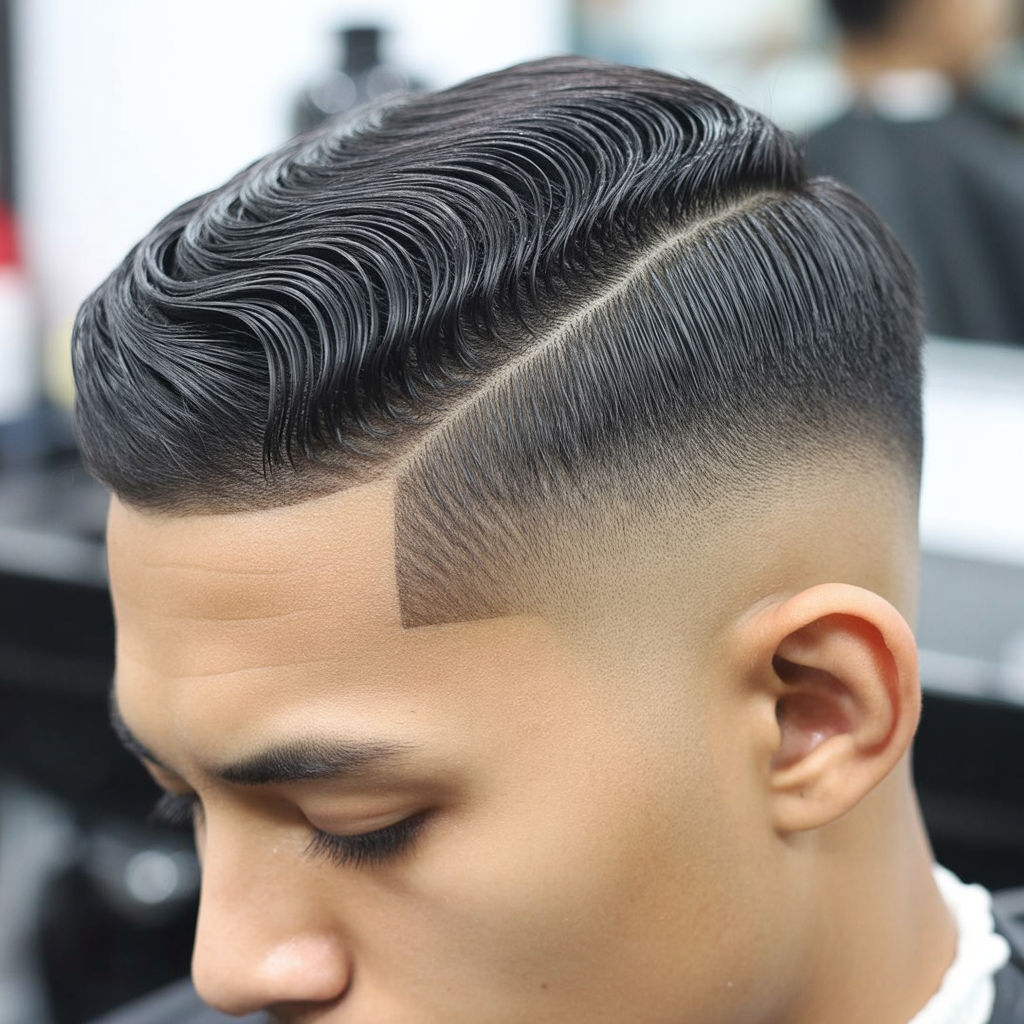
Understanding the High Taper Fade and Wave Combination
The high taper fade with waves represents more than just a haircut—it’s a commitment to daily maintenance and proper technique. The high taper fade portion begins above the temples, creating a dramatic contrast between the longer hair on top and the gradually faded sides. This elevated starting point provides maximum canvas space for your wave pattern while maintaining clean, professional edges.
“The beauty of pairing waves with a high taper is that it frames the wave pattern beautifully,” explains Marcus Williams, a master barber with 15 years of experience in Atlanta. “The fade acts like a picture frame, drawing attention to the texture and work you’ve put into your waves. But it’s crucial that both elements are maintained properly, or the entire look falls apart.”
The wave pattern itself—whether you’re working toward 360 waves, 180 waves, or 540 waves—requires a specific hair texture and consistent grooming routine. When combined with the precision of a high taper fade haircut, the result is a hairstyle that commands attention and respect.
Preparing Your Hair for Wave Development
Before you can achieve perfect definition in your waves, your hair needs proper preparation. The foundation of great waves begins with hair health, and this means understanding your hair type and its specific needs.
Starting with clean, moisturized hair is non-negotiable. Many men make the mistake of over-washing their hair, stripping away natural oils that are essential for wave formation. Washing your hair two to three times per week with a moisturizing shampoo is typically sufficient. Between washes, co-washing—using conditioner to cleanse without harsh sulfates—helps maintain moisture balance.
Your hair length matters significantly when developing waves with a high taper fade. Ideally, the top section should be between one to two inches long when you’re establishing your pattern. This length provides enough texture to create defined waves while working harmoniously with the tapered sides. If your hair is too short, the waves won’t have enough length to lay down properly. Too long, and you’ll struggle to see definition.
“I always tell my clients that wave development is about patience and hair health first,” notes Jamal Thompson, a barber specializing in wave patterns in Los Angeles. “You can’t rush the process. Your hair needs to be the right length, properly moisturized, and you need to understand your hair’s natural grain before you start brushing.”
The Brushing Technique: Foundation of Perfect Waves
Brushing is the cornerstone of wave development, and technique matters immensely. The goal is to train your hair to lay down in a specific pattern, creating the ripple effect that defines waves.
Start by identifying your crown—the point where your hair naturally spirals. This becomes your central reference point. Using a medium to firm bristle brush, you’ll brush outward from your crown in the direction you want your waves to flow. For 360 waves, this means brushing around your entire head in a circular pattern.
The brushing motion itself should be deliberate and consistent. Apply moderate pressure—enough to feel the bristles against your scalp but not so much that you’re causing discomfort or irritation. Each brushing session should last a minimum of 20-30 minutes, divided into multiple sessions throughout the day if possible.
“Most guys don’t brush long enough or with the right technique,” Williams observes. “You’re literally training each hair follicle to grow in a specific direction. That takes time and repetition. I recommend brushing at least three times daily—morning, midday, and before bed—for optimal results.”
Your brush selection also plays a crucial role. Start with a softer brush when your waves are beginning to form, gradually moving to firmer brushes as your pattern develops. Many wavers keep multiple brushes on hand: a soft brush for daily maintenance, a medium brush for styling, and a hard brush for deepening wave patterns.
Wolfing: The Secret to Deep Wave Definition
Wolfing is a term in the wave community that refers to extending the time between haircuts to allow your hair to grow longer than usual. This period is essential for creating depth and definition in your wave pattern.
During the wolfing phase, you’ll continue your regular brushing routine but resist the temptation to cut your hair. This allows the waves to mature and become more pronounced. Most wavers wolf for anywhere from four to eight weeks, though the ideal duration depends on your hair’s growth rate and texture.
“Wolfing is uncomfortable because your hair looks less neat during this phase, but it’s absolutely necessary for premium waves,” Thompson explains. “This is when your waves truly set in. The discomfort is temporary, but the definition you gain is worth it. When you finally get that cut with a high taper fade after a proper wolf, the reveal is incredible.”
During this phase, durag or wave cap wearing becomes even more critical. These tools compress your hair, helping to set the wave pattern more deeply. You should be wearing your durag or wave cap whenever you’re not in public—especially while sleeping.
Maintaining the High Taper Fade Component
While you’re developing your waves, the taper fade requires its own maintenance schedule. Unlike the top section, which you’ll let grow during wolfing periods, your taper fade needs regular touch-ups to maintain its clean appearance.
For a high taper fade, you’re looking at touch-ups every one to two weeks, depending on how fast your hair grows and how sharp you want your lines. Many wavers coordinate their fade touch-ups with their wolfing cycles, getting a full cut after completing a wolf and maintaining the fade with touch-ups in between.
When visiting your barber, communication is key. Be specific about where you want your taper to start and how gradual you want the fade to be. A high taper that starts too low can compromise the “high” aspect of the style, while one that’s too abrupt may not blend well with your wave pattern.
“I always ask clients with waves to show me their wave pattern first,” Williams notes. “The fade needs to complement the waves, not compete with them. The blend should be seamless, and the high starting point should showcase the wave work on top without any awkward transitions.”
Your barber should be using multiple guard sizes—typically starting with a 0 or 0.5 at the bottom and gradually working up to where your waves begin. The transition should be so smooth that it’s difficult to identify where one length ends and another begins.
Essential Products for Wave and Fade Maintenance
The right products make a significant difference in both wave development and fade maintenance. Your product lineup should address moisture, hold, and overall hair health.
Wave pomades and creams are designed specifically for wave patterns. These products typically have a heavier consistency than regular pomades, helping to weigh hair down and encourage the wave pattern. Apply these products to damp hair, working them through evenly before brushing. Products containing natural oils like coconut, argan, or jojoba provide moisture without leaving excessive buildup.
For daily maintenance, a good moisturizing spray is invaluable. These sprays can be applied throughout the day to refresh your waves without making your hair greasy. Look for formulas that include water as the primary ingredient, followed by light oils and botanical extracts.
“Product quality matters more than quantity,” Thompson emphasizes. “A good wave pomade will cost more upfront, but you’ll use less of it and get better results. Cheap products with mineral oil and petroleum can actually inhibit wave development by coating the hair shaft rather than nourishing it.”
Your fade maintenance requires different products. A light oil or moisturizer for your scalp prevents dryness and flaking in the faded sections. Many men experience dry scalp after getting a fade because the clippers can be irritating. A soothing scalp oil applied daily keeps the skin healthy and comfortable.
The Durag: Your Most Important Tool
No discussion of waves is complete without addressing the durag. This essential tool serves multiple purposes: it compresses your hair to set the wave pattern, protects your waves while you sleep, and maintains moisture in your hair.
The key to effective durag use is consistency and proper tying technique. Your durag should be snug enough to compress your hair but not so tight that it causes headaches or leaves deep impressions. The goal is steady, even pressure across your entire head.
When tying your durag, smooth your hair down with your brush first, ensuring your waves are laying in the right direction. Then place the durag on your head with the center seam aligned with the center of your forehead. Wrap the strings around your head, crossing them in the back, bringing them back to the front, and tying them off. Finally, fold down the flap in the back and tuck it in.
“I tell clients the durag is their best friend,” Williams says. “If you’re serious about waves, it should go wherever you go. Keep one in your car, one in your gym bag, one at work if you can. Any time you have a few hours where you don’t need to be seen publicly, that durag should be on your head.”
For sleeping, a silky or satin durag is preferable to traditional cotton. These materials create less friction, preventing frizz and preserving your wave pattern overnight. Some wavers double up with both a durag and a wave cap for maximum compression while sleeping.
Troubleshooting Common Wave and Fade Issues
Even with proper technique, you’ll likely encounter challenges on your wave journey. Understanding common issues and their solutions will keep you on track.
Fork patterns occur when your waves split and flow in multiple directions rather than maintaining a uniform pattern. This typically happens when you’re not brushing consistently in the same direction or when you’re brushing too hard in some areas. The solution involves returning to basics: identify your crown, establish your brushing pattern, and maintain absolute consistency.
Uneven wave depth around your head is another common issue. Most people have areas where waves form more easily—typically the sides—while other areas like the crown or back remain less defined. This requires focused attention on problem areas, spending extra time brushing and applying product to these stubborn sections.
“The crown is the toughest area for most guys,” Thompson notes. “Your hair naturally wants to spiral there, so training it to wave requires extra effort. I recommend spending five to ten minutes just on your crown during each brushing session if that’s a problem area for you.”
For the taper fade, the most common issues involve fade lines that are too harsh, fades that grow out unevenly, or irritation from frequent cutting. Working with an experienced barber who understands waves is crucial. They should be able to create a fade that complements your hair texture and maintains clean lines as it grows out.
Scalp irritation in the faded areas often results from over-cutting or not moisturizing adequately. Give your scalp time to recover between cuts, and use a soothing oil or aloe-based product to calm irritation.
Styling and Daily Maintenance Routine
Once you’ve developed your wave pattern and established your high taper fade, daily maintenance becomes your focus. A consistent routine ensures your style always looks fresh.
Your morning routine should begin with brushing. Even if you wore your durag all night, brush for at least five to ten minutes to refresh your pattern. Apply a small amount of wave pomade or moisturizer, working it through your hair, then brush again to distribute the product and set your waves.
Throughout the day, carry a brush for touch-ups. After removing hats, after workouts, or whenever your waves look slightly disheveled, a quick brushing session will restore definition. Many wavers keep a brush in their car, desk, or gym bag for these situations.
Evening maintenance is equally important. Brush your waves, apply a light moisturizer if needed, then put on your durag before bed. This nightly compression is what maintains and deepens your wave pattern over time.
“Consistency is everything,” Williams emphasizes. “The guys with the best waves are the ones who never skip their routine. It’s not about doing something special occasionally—it’s about doing the right things every single day.”
For your taper fade, daily maintenance involves keeping your hairline sharp. Many men use edge control products or pomades to keep their edges neat between barber visits. Small styling trimmers can be used carefully to maintain your neckline and clean up any stray hairs around your ears, though most professionals recommend leaving the actual fade work to your barber.
Advanced Wave Techniques for Maximum Definition
Once you’ve mastered the basics, several advanced techniques can take your wave game to the next level.
The two-brush method involves using two brushes simultaneously—one in each hand—brushing in a synchronized motion. This ensures even pressure and consistent pattern development across your entire head. It’s particularly effective during longer brushing sessions.
Ragging is a technique where you use a soft cloth or rag to brush your waves instead of a traditional brush. This creates a slightly different type of compression and can help add shine to your waves. Many wavers incorporate ragging into their routine once or twice a week.
Connection work focuses on the areas where different wave patterns meet, ensuring smooth transitions rather than abrupt changes in direction. This is particularly important around the crown and the transition points between the top and sides of your head.
“Advanced wavers understand that it’s all about the details,” Thompson explains. “The difference between good waves and great waves comes down to how well everything connects, how uniform the pattern is, and how much depth you’ve achieved. These advanced techniques help you refine those details.”
The wash-and-style method is another advanced approach where you carefully brush your waves while your hair is damp, immediately after washing. This takes advantage of your hair’s malleability when wet, helping to set the pattern more deeply. You’ll brush for an extended period, apply product, then immediately put on your durag while your hair dries.
The Cultural Significance and Personal Expression
Beyond technique and maintenance, the high taper fade with waves carries significant cultural meaning, particularly in Black and Latino communities where the style originated and continues to thrive. Understanding this context adds depth to your appreciation of the hairstyle.
Waves represent dedication and discipline. They can’t be achieved overnight or purchased—they must be earned through consistent effort. This makes them a point of pride and a visible demonstration of commitment. The style has been associated with various cultural movements, music genres, and communities over the decades.
“Waves tell a story,” Williams reflects. “When I see someone with premium waves, I know they’re disciplined. I know they put in work. There’s a respect that comes with that. It’s not just about looking good—it’s about what that style represents.”
The high taper fade component adds a modern, polished element that makes the style appropriate for various contexts, from professional environments to social settings. This versatility has contributed to the style’s enduring popularity and its evolution over time.
Your wave pattern becomes a form of personal expression. Some wavers prefer deep, pronounced waves with maximum depth. Others go for a tighter, more subtle pattern. The direction of your waves (360, 180, or 540), the depth, and how you maintain them all contribute to a look that’s uniquely yours.
Conclusion
Achieving perfect definition with a high taper fade and waves requires understanding the technical aspects of both elements, committing to a consistent maintenance routine, and appreciating the cultural significance of the style. The high taper fade with waves isn’t just a haircut—it’s a lifestyle choice that demands daily attention and proper technique.
From selecting the right products and mastering brushing techniques to timing your wolfing periods and maintaining your fade, every aspect plays a crucial role in the final result. Working with a skilled barber who understands wave patterns and can execute a clean high taper fade is essential, as is your dedication to the daily maintenance routine.
Remember that wave development is a journey, not a destination. Your pattern will continue to improve and deepen over time as you refine your technique and remain consistent with your routine. The combination of the clean, modern aesthetic of the high taper fade with the textured sophistication of waves creates a truly distinctive look that reflects both style and commitment.
Stay patient, remain consistent, and trust the process. The perfect wave definition you’re working toward is absolutely achievable with the right approach and dedication.
Frequently Asked Questions
How long does it take to get waves with a high taper fade? Developing visible waves typically takes 4-8 weeks of consistent daily brushing, though some people see initial patterns within 2-3 weeks. The high taper fade can be cut immediately, but your best results come after completing at least one wolfing cycle. Full, deep wave definition may take 3-6 months of dedicated maintenance.
What hair type is best for getting waves? Hair types that are naturally curly or coily (Type 3 and Type 4 on the hair type chart) typically develop waves most easily. However, people with looser curl patterns can still achieve waves with proper technique, though it may require more time and effort. The key is having some natural texture to work with.
How often should I brush my hair to get waves? For optimal wave development, brush your hair for at least 20-30 minutes daily, ideally divided into three sessions: morning, midday, and before bed. During the initial wave development phase, some people brush for up to an hour daily. Consistency matters more than duration—regular, proper brushing technique is essential.
Can I get a high taper fade while developing my waves? Yes, you can maintain a high taper fade while developing waves. The key is timing your full haircuts around your wolfing cycles. Get touch-ups on the fade every 1-2 weeks to keep it sharp, but allow the top section to grow for 4-8 weeks between full cuts to develop wave depth and definition.
What products do I need for waves with a high taper fade? Essential products include a wave-specific pomade or cream, moisturizing spray for daily maintenance, a quality durag or wave cap, and a brush (or multiple brushes of varying firmness). For the fade, you’ll need a light scalp oil or moisturizer to prevent dryness in the cut areas.
Should I wear my durag all the time? Wear your durag as much as possible when you’re not in public or professional settings—especially while sleeping. Aim for at least 8-12 hours daily of durag compression. The more consistently you wear it, the faster and deeper your wave pattern will develop. Many wavers wear it during most at-home activities.
What’s the difference between 360 waves, 180 waves, and 540 waves? 360 waves go completely around your head in a circular pattern from your crown. 180 waves flow from a single point (typically the front or back) in one primary direction. 540 waves are the most complex, featuring a double-swirl pattern. Most people start with 360 waves as they’re the most balanced and achievable pattern.
How do I prevent my waves from getting messed up when I sleep? Always wear a durag or wave cap when sleeping, preferably made from silk or satin material to reduce friction. Make sure to brush your waves and lay them down properly before putting on your durag. Using a satin or silk pillowcase provides additional protection, and some wavers use both a durag and a wave cap for maximum compression.
What should I do if my waves aren’t connecting properly? Connection issues typically stem from inconsistent brushing patterns or not brushing long enough. Focus on the problem areas during each brushing session, spending extra time ensuring you’re brushing in the correct direction from your crown. Make sure you’re using the same brushing pattern every single time—variation in direction causes disconnection.
How much does it cost to maintain a high taper fade with waves? Initial investment includes brushes ($10-30 each), durags ($5-15 each), and wave products ($10-25). Ongoing costs include barber visits every 1-2 weeks for fade touch-ups ($20-40 per visit) and product replenishment every 1-3 months. Total monthly maintenance typically ranges from $60-120, depending on your location and barber rates.