
If you’ve ever sat in a barber’s chair and struggled to explain exactly what you want, you’re not alone. The debate around high taper fade vs skin fade is one of the most common conversations happening in barbershops across the UK right now — and for good reason. Both styles are sharp, modern, and incredibly versatile. But they’re not interchangeable, and choosing the wrong one for your face shape, lifestyle, or hair texture can mean the difference between a cut that turns heads and one that feels “off” after just a few days.
In this guide, we’ll cut through the confusion (pun intended). Drawing on real barber expertise, style science, and what actually works across different hair types and daily routines, we’ll walk you through everything you need to know to make the right call – and communicate it confidently to your barber.
First, Let’s Get the Basics Right
What Is a High Taper Fade?
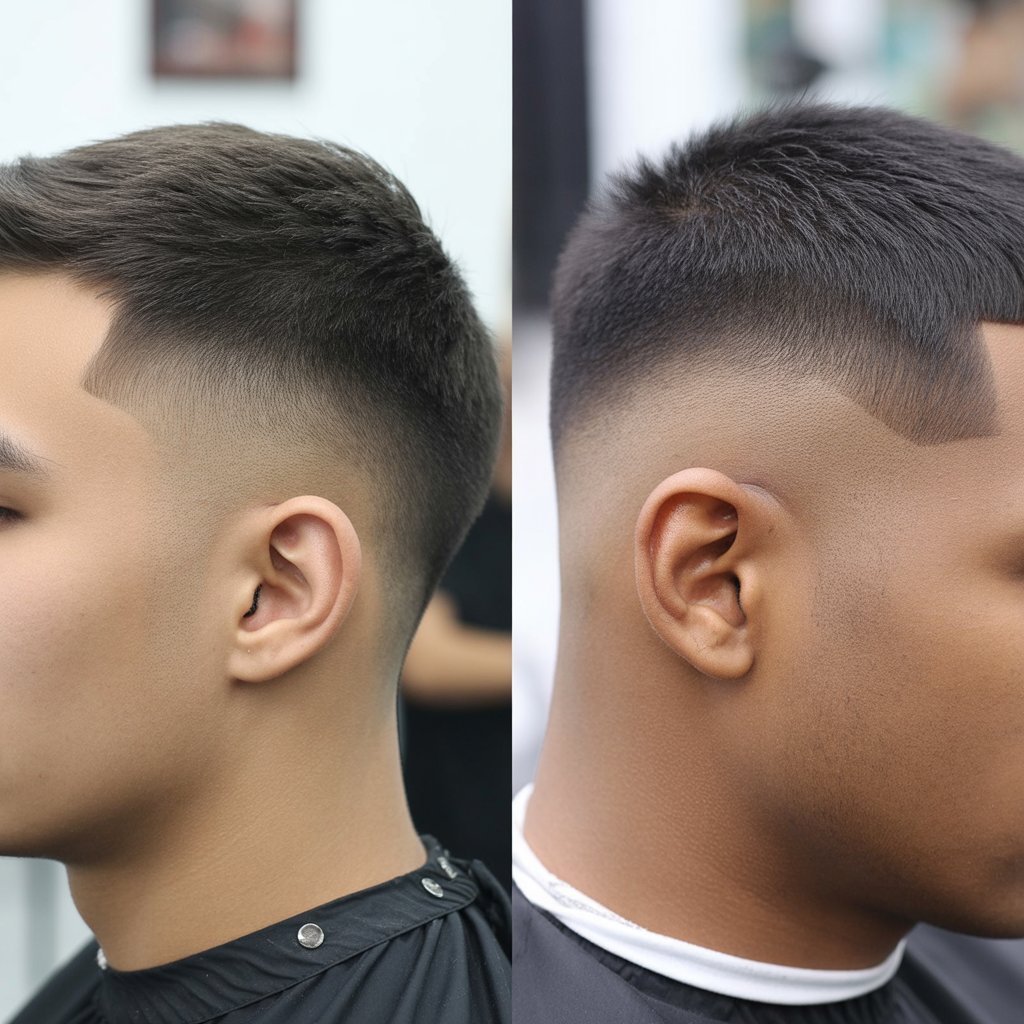
A high taper fade starts the blending process high up on the sides of the head – typically above the temples, near the upper third of the skull. The hair transitions gradually from longer on top to shorter on the sides, but crucially, it doesn’t necessarily go all the way down to the skin. The “taper” element means the length reduces incrementally, creating a clean, structured gradient.
Key visual: Think sharp lines, strong contrast, and a style that frames the face boldly without fully exposing the scalp.
What Is a Skin Fade?
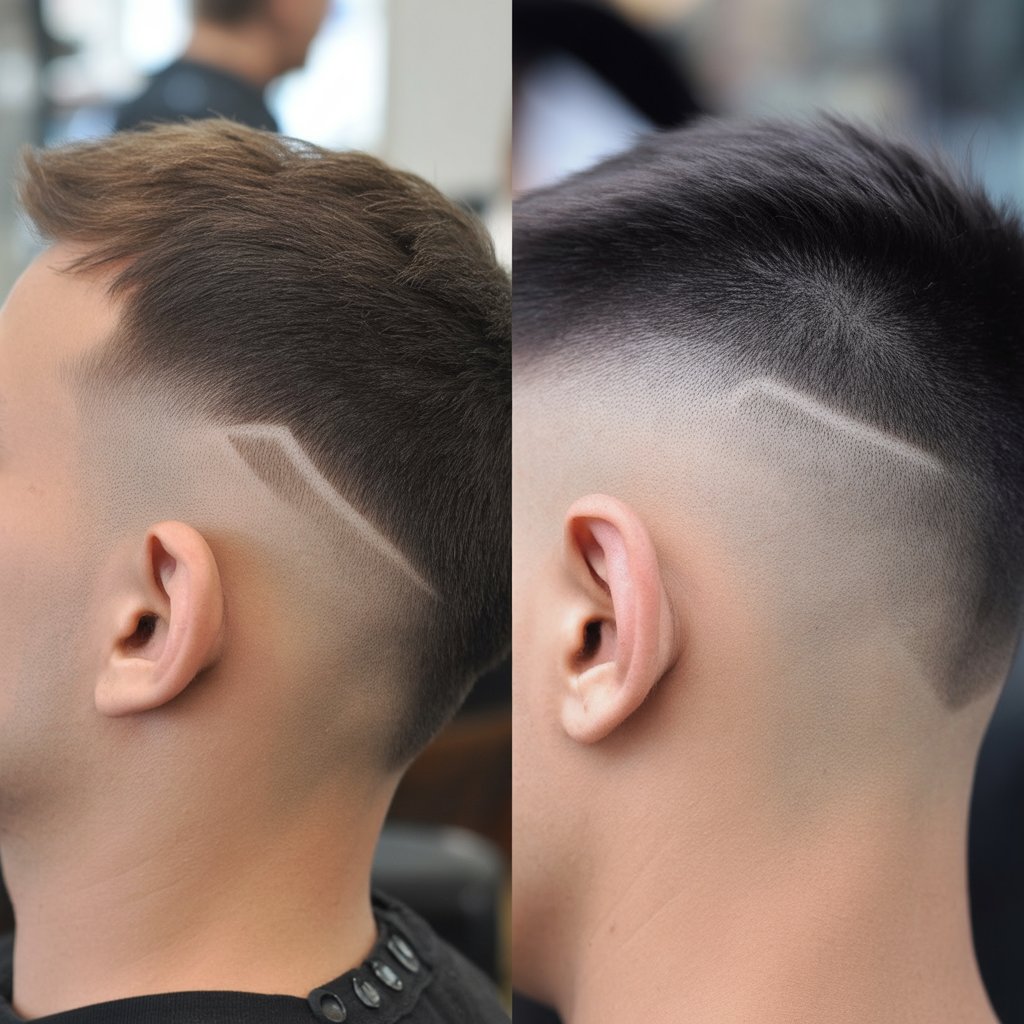
A skin fade – sometimes called a bald fade – takes the blending all the way down to bare skin. The graduation is tighter and more dramatic, with zero hair at the base that slowly builds up as you move higher on the head. A skin fade can start at various heights (low, mid, or high), which is an important distinction many people overlook.
Key visual: A clean, almost surgical transition from skin to hair. High contrast, ultra-modern, and visually striking.
The Core Differences at a Glance
| Feature | High Taper Fade | Skin Fade |
| Blend endpoint | Leaves some hair (not to skin) | Goes to bare skin |
| Maintenance | Every 3–4 weeks | Every 2–3 weeks |
| Suitable for | Most face shapes & hair types | Strong jawlines & thicker hair |
| Boldness | Moderate–high contrast | Maximum contrast |
| Grow-out grace | Better — blends naturally | Can look patchy |
| Versatility | Work & casual settings | More style-specific |
| Scalp sensitivity | Lower risk of irritation | Higher — skin is exposed |
High Taper Fade — Pros and Cons
Pros of the High Taper Fade
- Works across almost every face shape. Whether you’re oval, square, round, or heart-shaped, the high taper fade frames the face in a way that adds structure without over-emphasising any one feature.
- Slower to lose its shape. Because it doesn’t go to the skin, the grow-out is more forgiving. You can stretch visits to your barber by an extra week or two without your cut looking neglected.
- More suitable for professional environments. In offices or client-facing roles where a bold skin fade might read as too edgy, the high taper sits comfortably in a “sharp but not extreme” zone.
- Works well with natural, afro-textured, and coily hair. The taper preserves more curl pattern and density at the sides, making it far more adaptable across hair textures.
- Less scalp exposure means reduced sensitivity. For men prone to razor bumps, dry skin, or sensitivity, keeping a sliver of hair at the base protects the scalp.
Cons of the High Taper Fade
- Less dramatic contrast. If you want that ultra-sharp, high-impact look, the taper fade may feel a little restrained compared to the skin fade.
- Can be harder to define precisely. Without the concrete anchor of “to the skin,” the high taper is more dependent on your barber’s eye and skill to nail the gradient.
- Doesn’t showcase certain styles as boldly. Styles like high-top fades, mohawks, or hard parts tend to look more impactful against a skin fade backdrop.
Skin Fade — Pros and Cons
Pros of the Skin Fade
- Maximum visual impact. There’s no denying it — a skin fade is one of the sharpest looks in modern barbering. The contrast between bare skin and hair is bold and confident.
- Exceptional cleanliness at the neckline and temples. For men who care deeply about crisp edges and clean lines, a skin fade delivers precision that’s hard to beat.
- Suits a wide range of styles on top. Quiffs, faux hawks, textured crops, and even longer styles all benefit from the high contrast base a skin fade creates.
- Makes hairlines appear more defined. For men whose natural hairlines aren’t perfectly symmetrical, a well-executed skin fade can visually correct and sharpen the appearance of the hairline.
Cons of the Skin Fade
- Requires more frequent maintenance. Once the skin fade grows out even slightly, it loses its defining characteristic. Most men need a visit every 2–3 weeks to keep it looking intentional.
- Not forgiving of barber errors. A patchy or uneven skin fade is very visible. This style demands a high level of skill and should only be trusted to an experienced barber.
- Can irritate sensitive skin. Clipper work that close to the scalp — especially around the ears and nape — can cause folliculitis, razor bumps, or dryness in men with sensitive skin.
- Can limit styling flexibility. In environments where a very sharp, bold aesthetic isn’t appropriate, the skin fade can feel out of place compared to more understated alternatives.
What Barbers Actually Say
“Most clients come in saying they want a skin fade, but when I ask about their lifestyle, their job, and how often they can come in, the high taper fade turns out to be the better option for them. It’s sharper than people assume, and it suits a much wider range of people.”
— Marcus Reid, Master Barber, 14 years’ experience, London
“The skin fade is an art form, but it’s not for everyone. Men with fine hair or lighter skin tones especially need to think twice — the contrast can look very harsh if the proportions aren’t right. The taper is actually the more technically demanding cut to perfect, even if the skin fade looks bolder.”
— Daniel Osei, Barbering Educator & Competitive Stylist, Birmingham
Which One Is Right for Your Hair Type?
Hair type plays a much bigger role in this decision than most men realise:
- Fine or straight hair: The skin fade can work beautifully, but the high taper is more forgiving as the hair grows out — less risk of the “patchy” effect.
- Thick or coarse hair: Both styles work well. The skin fade can provide excellent weight removal and makes thick sides look intentionally bold rather than untamed.
- Afro-textured or coily hair: The high taper fade is often preferred, as it preserves the natural curl pattern at the sides and avoids the stark contrast that can look unnatural on tighter curl patterns.
- Wavy hair: Either works. A high skin fade with wavy hair on top creates a beautiful textured look, while the high taper keeps things cleaner and more structured.
Which One Is Right for Your Face Shape?
This is where the high taper fade vs skin fade debate gets genuinely nuanced. As a rule of thumb: the higher the contrast and more volume removed from the sides, the more your face shape is put under the spotlight.
- Oval face: Lucky you — both styles suit an oval face. Go with whichever matches your personality.
- Round face: The high taper fade with added height on top is your friend. The skin fade’s extreme contrast can actually emphasise roundness unless offset by volume upstairs.
- Square face: Both styles complement a square jawline. The skin fade particularly accentuates the jaw’s strong angles.
- Heart or diamond face: The high taper is generally more flattering — it avoids drawing attention to a narrow chin by keeping more bulk at the sides.
- Oblong/rectangular face: Avoid excessive height on top. A high taper fade kept closer on top is better than a tall skin fade build-up.
Maintenance Reality Check
One of the most underestimated factors in choosing between these two styles is how much time and money you’re genuinely willing to invest in upkeep.
A skin fade at its sharpest has a shelf life of about ten to fourteen days before it starts losing definition at the base. If you’re getting it done at a good barbershop in the UK, that’s potentially two visits per month — factoring in the cost of premium barbering, that adds up quickly over a year.
The high taper fade, by contrast, maintains its shape for three to four weeks on average. It’s the smarter financial choice for men on a budget or those who simply don’t have the time to be in the chair every fortnight.
Interlink: Explore the Full High Taper Fade Guide
If you’re leaning toward the high taper fade and want to explore styles, lengths, and combinations in more detail, our comprehensive guide covers everything you need: High Taper Fade Haircuts for Men — BarbersDirect. From classic pompadours to textured crops and everything in between, it’s the definitive resource for this style.
So, Which Should You Choose?
There’s no objectively “better” option — only the one that’s better for you. Here’s a quick decision framework:
- Choose the high taper fade if: you want a low-maintenance, versatile cut that works in professional and social environments, suits most hair types, and grows out more gracefully.
- Choose the skin fade if: you can commit to frequent barbershop visits, you want maximum visual impact, you have a strong jawline or oval face, and your skin handles close clipper work well.
- Talk to your barber: Don’t just show them a photo — tell them your lifestyle, how often you visit, and what you do for work. A good barber will guide you to the right choice every time.
Final Thought
Both the high taper fade and the skin fade are rooted in the same craft tradition — precision blending, clean lines, and a respect for the individual’s natural features. The best cut isn’t the one that looks sharpest on Instagram; it’s the one that fits your real life, your maintenance habits, and your confidence. When in doubt, go taper first. You can always go closer next time — but you can’t un-shave a fade.
FAQs
What is the difference between a taper fade and a skin fade?
A taper fade gradually reduces hair length from longer to shorter, but doesn’t reach the skin. A skin fade (also called a bald fade) takes the blend all the way down to bare skin at the base. The skin fade produces higher contrast, while the taper is more subtle and gradual.
Is a high taper fade suitable for all hair types?
Yes — the high taper fade is one of the most universally flattering fades. It works well across straight, wavy, coarse, and afro-textured hair. Because it preserves some length at the sides, it tends to be more adaptable than the skin fade across different textures.
How often do you need to get a skin fade touched up?
Most barbers recommend touching up a skin fade every two to three weeks. Because it reaches bare skin, even a small amount of growth significantly changes the look. If you’re on a tight budget or schedule, the high taper fade is a more practical option.
Which fade looks better with a beard?
Both work well with a beard, but the skin fade generally creates a more dramatic contrast that pairs powerfully with a full beard. The high taper fade blends more naturally with a light stubble or short beard. Discuss the beard line with your barber to ensure the fade and beard connect seamlessly.
Can a skin fade cause skin irritation or razor bumps?
Yes, for men with sensitive skin or coarse, curly hair, a skin fade can cause folliculitis, razor bumps, or ingrown hairs at the nape and temples. The high taper fade reduces this risk by not exposing the skin at the base. Using a good post-cut scalp treatment and avoiding tight clothing around the neck can help.
What face shapes suit a high taper fade best?
The high taper fade suits most face shapes, but particularly benefits round and heart-shaped faces. It adds structure without excessively exposing the scalp or widening the forehead. For square and oval face shapes, both the taper and skin fade work well.
Is a high taper fade the same as a high fade?
No — though related. A high fade simply refers to where the fade begins (high on the head). A high taper fade combines the high starting point with a tapering technique that gradually blends without necessarily reaching bare skin. A high skin fade starts high and goes all the way to skin.
Which fade lasts longer before needing a trim?
The high taper fade lasts longer — typically three to four weeks — because it doesn’t rely on a skin-close base for its definition. A skin fade begins to look grown out after roughly ten to fourteen days. If you can only visit a barber once a month, the taper fade is the more practical choice.
Can you get a high taper fade on short hair?
Absolutely. A high taper fade can work even when there’s very little length on top. In fact, on very short styles, the high taper creates clean contrast and shape without requiring much to work with. Pair it with a low clipper grade on top for a sharp, close-cropped look.
Which is better: high taper fade or skin fade for Black men?
Both styles are popular and work beautifully on Black men with afro-textured hair. However, many barbers recommend the high taper fade for coilier textures as it preserves more of the natural curl pattern at the sides and avoids the stark skin-to-hair contrast that can sometimes look harsh. That said, personal preference and the specific style on top matter most – it’s always worth consulting with a barber who specialises in textured hair.