

Whether you’re browsing High Taper Fade for Boys: Kid-Friendly Haircut Ideas for a younger sibling or looking for something a little more grown-up for yourself, the high taper fade has become the defining haircut of the teenage generation. Walk into any secondary school in the UK and it’s immediately obvious – this cut dominates. Clean on the sides, versatile on top, and sharp enough to look intentional without a great deal of daily effort. For teenagers navigating the social pressures of school while also developing their own sense of identity, the high taper fade hits a genuinely useful sweet spot.
This isn’t a trend driven purely by celebrity or social media, either. The rise of the high taper fade among teenage boys reflects something more practical: it’s a haircut that holds up across a full school week without requiring a morning routine that rivals a professional photo shoot. That kind of real-world durability matters at that age more than people give credit for.
In this guide, we’re going to break down the best high taper fade styles specifically suited to teenagers – covering hair textures, face shapes, school dress code considerations, and the styles that are genuinely getting requested most in UK barber chairs right now.
High Taper Fade for Teens
What Actually Makes a High Taper Fade?

Before diving into styles, it’s worth being precise about terminology, because “fade” gets used loosely and it matters when you’re sitting in the barber’s chair. A high taper fade means the fade line starts high — above the temples and around the upper occipital bone — and the hair gradually tapers from that point down to the skin, or near-skin, at the neckline and around the ears.
The key difference from a standard fade is the starting point. A mid fade begins around the temple level. A high fade starts above it, which creates a more dramatic contrast between the top and sides. The taper element refers to the gradual transition rather than a sharp, blunt line – which typically reads as cleaner and more refined than a hard part or a skin fade with no blending.
For teenagers, this distinction matters because the high taper fade tends to look smart enough for formal school environments without appearing overly severe. It’s the Goldilocks zone of school-appropriate sharp haircuts.
For a full breakdown of every variation – low, mid, high, skin, and everything in between – read our comprehensive guide: High Taper Fade Haircuts for Men. It covers history, technique, and styling in full depth.
Why Teenagers Are Choosing This Cut

The high taper fade’s dominance among teens isn’t accidental. It addresses several real concerns simultaneously.
It grows out well. Teenagers can’t always get to a barber every two to three weeks the way an adult professional might. A high taper fade, particularly one that doesn’t go down to a zero skin fade, maintains its shape reasonably well for four to six weeks before it looks noticeably overgrown. The taper helps – the gradual graduation means there’s no sudden harsh line that becomes glaring as the hair grows.
It works with school dress codes. Most UK secondary schools don’t explicitly ban fades, but they do expect hair to look “neat and tidy.” A high taper fade, particularly paired with a structured top, almost universally satisfies that standard. It’s tidy by design.
It suits a wide range of hair textures. Straight, wavy, coily, Afro-textured – the high taper fade works as a framework across all of them. The top styling changes substantially, but the fade structure itself is universally applicable. This is part of why it’s become so cross-culturally popular in schools.
“The high taper fade is probably the most requested cut I do for teenagers across the board. It doesn’t matter if they’ve got fine straight hair or thick Afro hair — the structure is the same and it works every time. What changes is how we handle the top. But the fade itself? Universal.”— Marcus Allen, Master Barber, North London (15 years’ experience)
The Best High Taper Fade Styles for School
1. High Taper Fade with Textured Crop

If there’s one combination that has owned the decade for teenage boys in the UK, it’s this one. The textured crop — also called a French crop when worn with a heavy fringe – sits on top of a high taper fade with almost effortless synergy. The top is cut short and textured with either scissors-over-comb or point cutting, often with a slight fringe that can be worn messy or pushed back depending on the occasion.
For school, the textured crop needs almost nothing to maintain – a small amount of matte clay or texture paste worked through damp hair, and it’s done. It dries into shape. On non-school days, the same cut can be pushed back or styled more deliberately for a completely different look. One haircut, multiple applications.
2. High Taper Fade with Side Part
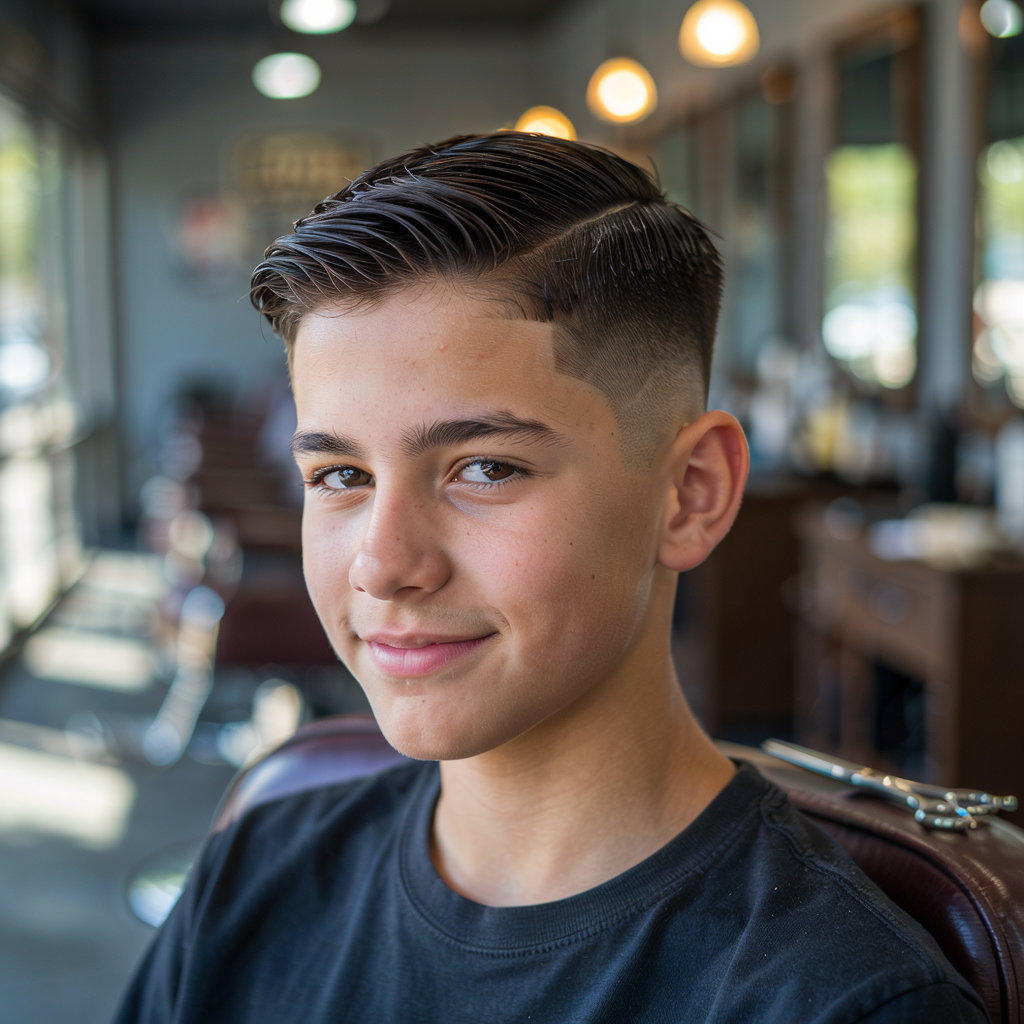
The side part is experiencing a quiet renaissance with teenagers who want something a touch more classic. Using a comb, the barber creates a clean, defined parting on one side during the cut — sometimes shaved in as a hard part for a sharper finish, sometimes left as a natural parting for a softer overall look. The top hair is swept to one side with a light-hold pomade or a medium-hold wax.
This style works particularly well for school environments that lean toward traditional uniform standards. It reads as deliberate and put-together without looking like you’ve spent an hour in front of a mirror.
3. High Taper Fade with Quiff
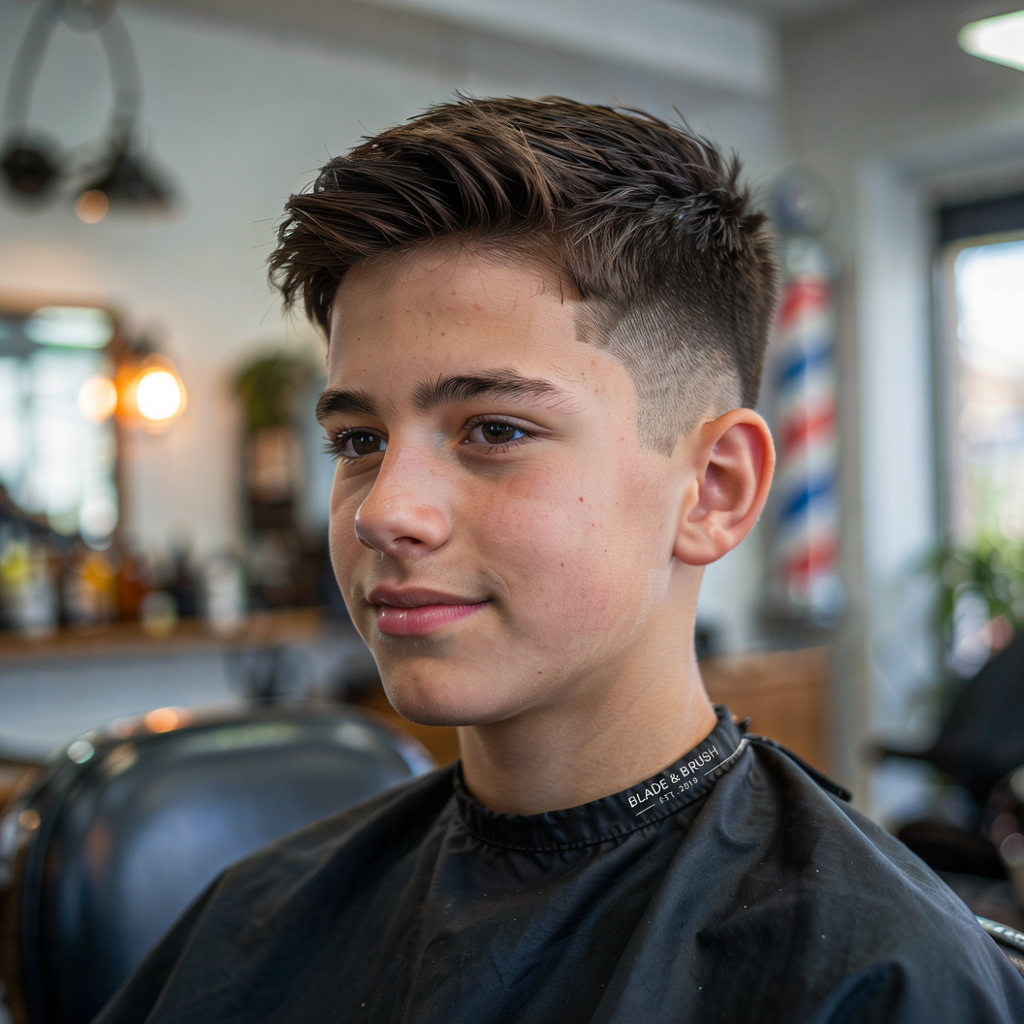
The modern quiff has shed the oily, heavily structured look of previous generations. Today’s teenage quiff is more relaxed — volume directed upward and slightly back, but with a matte, natural finish rather than a glossy sweep. Paired with a high taper fade, it creates height and drama that still manages to look appropriate in most school settings.
Hair needs to be at least three to four inches on top to carry a proper quiff, so this is a style for teenagers who don’t mind growing out their hair a bit between trims. The sides, by contrast, can be kept quite tight – which creates a strong visual contrast that makes the cut look especially intentional.
4. High Taper Fade with Afro Top

For Black and mixed-heritage teenagers with natural Afro-textured hair, the high taper fade with a shaped Afro top has become one of the most popular – and most culturally significant – styles of the last decade. The fade is executed with clippers from the skin or very close at the hairline, graduating smoothly up into the natural curl pattern of the Afro.
“A lot of the young lads coming in want what I call a ‘balanced Afro fade’ – where the fade is really clean and precise but the top is left natural with good shape. It celebrates their natural texture rather than fighting it. That confidence boost at that age is genuinely important.”- Darius Mensah, Afro Specialist Barber, Birmingham
The maintenance consideration here is moisture. Natural Afro hair benefits from a leave-in conditioner or a light curl cream to keep the top looking defined and healthy rather than dry. The fade itself needs regular upkeep – every two to three weeks is ideal to keep the line sharp.
5. High Taper Fade with Wavy Blowout

Teenagers with naturally wavy or loosely curly hair often resist haircuts that flatten or straighten their texture. The wavy blowout honours the natural wave pattern – the top is blow-dried and diffused to create soft, voluminous waves, which are then lightly set with a curl-enhancing cream or a small amount of mousse. Combined with a high taper fade, the result is relaxed but clearly styled.
This works particularly well on Mediterranean, South American, and mixed-heritage hair types where the wave pattern is medium in definition. It requires a diffuser attachment for a hairdryer, which most teenagers can manage independently once shown the technique.
6. High Taper Fade with Buzz Cut Top

For teenagers who genuinely don’t want to think about their hair – and there are many of them – the high taper fade with a short buzz cut on top delivers maximum structure for minimum effort. The top is cut with a clipper guard (typically a number 3 or 4) and the sides fade down from that point. It’s sharp, masculine, and requires precisely nothing by way of daily maintenance.
Some barbers add a slight taper or fade between the top guard length and the sides to soften the transition. Others keep a more distinct contrast. Both work – the choice comes down to how sharp the teenager wants the overall look to appear.
Face Shape Considerations for Teenage Boys
Most teenagers haven’t yet settled into their adult face shape, which can make style advice tricky. That said, some general principles hold.
Rounder faces benefit from height on top – a quiff or a longer textured top – which helps elongate the overall appearance. The high taper fade naturally slims the sides, which is already working in the right direction. Avoid extremely tight buzz cuts if a round face is a concern, as these emphasise roundness.
Longer, narrower faces suit styles with more width on top — a wavy blowout, a side-swept fringe, or a textured crop with a horizontal fringe can add the visual width that balances a longer face. The fade should probably not go sky-high in these cases, as extreme height on a long face can amplify the elongation.
Square or angular faces can carry almost any variation of the high taper fade confidently. The cut’s inherent structure complements angular bone structure well.
What to Tell Your Barber
One of the most consistent complaints barbers have about teenage clients — said with affection — is that they come in, sit down, and say “high fade, yeah” without any further specifics. Here’s what actually helps a barber give you the best result:
- How high: Show with your finger where you want the fade to start. “High” means different things to different barbers.
- How tight: Do you want it faded to a zero (skin) or left with a little shadow at the lowest point?
- What on top: Length, texture, whether you want a parting or not, and whether you want the barber to recommend something based on your hair type.
- How much maintenance: Be honest about whether you’ll actually use styling products or whether this cut needs to air-dry into something decent.
- Photos: Bring one. Even a rough idea from Instagram or Pinterest saves five minutes of verbal description and usually results in a more accurate cut.
Products That Actually Work for Teenagers
The product section often gets over-complicated. For teenagers with a high taper fade, the requirements are genuinely simple:
Matte clay or texture paste is the workhorse for most short-to-medium top lengths. It gives hold without the wet look, which tends to read as more natural and school-appropriate than gel or pomade. A pea-sized amount worked through damp hair covers most applications.
Salt spray is excellent for wavy hair types and for achieving that lived-in texture on a textured crop. Spray through towel-dried hair before scrunch-drying or air-drying for low-effort texture.
Lightweight pomade suits side parts and quiffs where some directional hold is needed without rigidity. Water-based pomades wash out easily, which matters for teenagers who are showering regularly.
One thing to genuinely avoid at this age: heavy waxes applied to very fine hair, which tend to flatten and grease rather than style. Less product, more technique, is almost always the better principle for teenage hair.
School Dress Code: What to Watch For
UK school hair policies vary more than most parents and students realise. Some schools are entirely fine with any taper or fade. Others have specific language about “extreme” haircuts, which can sometimes — controversially — be applied to even relatively standard fade cuts.
The general rule of thumb is this: if the fade is graduated rather than a harsh, shaved-in line, and if the top is neat and not excessively long or styled in a way that obstructs vision, most schools will have no objection. If there’s any doubt, it’s worth checking the school’s specific hair policy before the first day of a new term — not after.
Hard parts (shaved-in partings) and geometric designs cut into the fade are the elements most likely to draw attention from school staff. If those are off the table by school policy, opt for a natural parting over a hard part and keep any line work to the standard fade graduation rather than decorative patterns.
Explore More High Taper Fade VariationsFrom classic to contemporary, our main guide covers every variation of the High Taper Fade for Men in full detail — with styling tips, barber technique explanations, and product recommendations for every hair type.
FAQs
What is a high taper fade and how is it different from a regular fade?
A high taper fade starts above the temples — higher on the head than a mid or low fade — and gradually blends the hair from longer at the top down to shorter or skin-level at the neckline and around the ears. The difference from a regular fade is primarily the starting point of the graduation. A standard or mid fade begins at around temple height; a high fade begins above it, creating a more dramatic contrast between the top and the sides.
Is a high taper fade suitable for school?
Yes, in the vast majority of cases. A high taper fade is considered a clean, neat haircut and typically falls within UK school hair policies. The graduated nature of a taper means it looks deliberate and tidy rather than severe. The main exceptions are schools with very strict uniform policies that prohibit “extreme” cuts — in those cases, it’s worth checking the specific school policy, particularly if you’re planning to add a hard part or decorative line work.
How long does a high taper fade last before it needs a trim?
This depends on how tight the fade is and how fast the individual’s hair grows. In general, a high taper fade that goes to skin or near-skin will start to look visibly grown-out within two to three weeks. A slightly softer fade — one that doesn’t go quite to zero — can hold its shape for four to six weeks. For teenagers on a tighter barber budget, asking for a slightly less extreme fade initially can extend the life of the cut.
What hairstyle works best on top of a high taper fade for teenagers?
The textured crop is the most popular top pairing for teenage boys in the UK right now — it’s low-maintenance, versatile, and suits most face shapes and hair textures. Other well-suited options include a side part, a relaxed quiff, or a natural Afro top for those with Afro-textured hair. The best choice depends on the individual’s hair texture, face shape, and how much daily styling effort they’re realistically willing to put in.
Can a high taper fade work on curly or Afro hair?
Absolutely — the high taper fade is one of the most popular cuts for Afro-textured hair, where it has deep cultural roots. The fade structure works beautifully as a contrast to natural curl patterns on top. Barbers specialising in Afro hair use specific techniques including pick-blending and clipper-over-comb work to ensure the fade integrates seamlessly with the natural hair texture.
What’s the difference between a taper fade and a skin fade?
A skin fade goes down to the bare skin — zero guard, no shadow — at the lowest point of the cut. A taper fade graduates the hair but doesn’t necessarily reach the skin; there may be a light shadow or very short stubble at the base. Skin fades are more dramatic and require more frequent maintenance to stay sharp. Taper fades are generally more forgiving as they grow out and are often considered a more wearable everyday option.
How do I ask for a high taper fade at the barber?
Be specific: tell the barber where you want the fade to start (use your finger to point), how tight you want it at the bottom (skin or shadow), and what you want on top (length, texture, whether you’d like a parting). Bringing a reference photo is the single most effective thing you can do to ensure the cut matches your expectations. Don’t assume the barber’s interpretation of “high fade” matches yours — a brief conversation before the cut saves disappointment afterward.
Does a high taper fade suit all face shapes?
The high taper fade is relatively versatile across face shapes, but adjustments to the top styling can help balance different proportions. Oval and square faces tend to carry most variations effortlessly. Rounder faces benefit from added height on top to elongate the overall appearance. Longer or narrower faces do better with more volume on the sides and a top style that adds horizontal width rather than additional height.
What products should a teenager use to style a high taper fade?
For most teenage boys, a good matte clay or texture paste is the most useful all-round product — it gives natural hold without the greasy, wet look. Salt spray is excellent for wavy hair types. Lightweight pomade suits side parts and quiffs where directional hold is needed. The general principle is to use less product than you think you need: a pea-sized amount of clay worked through towel-dried hair covers most applications without overloading the hair.
Is the high taper fade a good first fade for teenagers?
Yes — many barbers actually recommend starting with a high taper rather than a mid or high skin fade for younger clients getting their first fade. The high taper’s graduated blending is forgiving and looks intentional even as it grows out. It’s also a good starting point for understanding what kind of fade works best for your specific hair texture and head shape before committing to a more extreme variation. Starting here and adjusting from cut to cut is a sensible approach.