
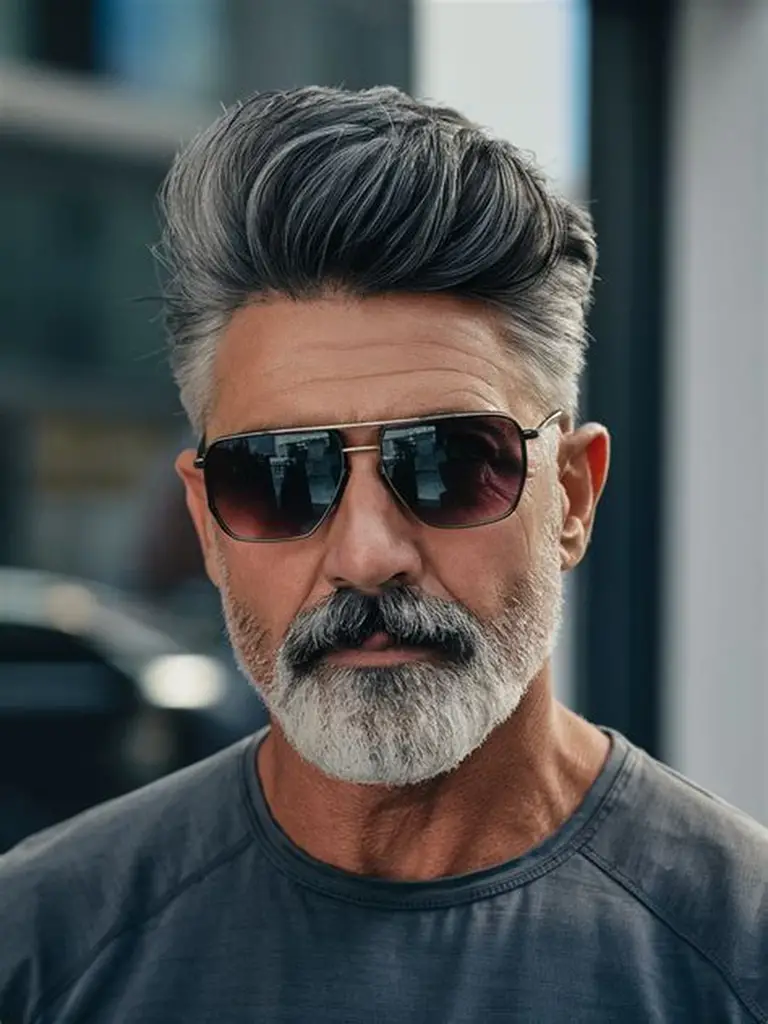
The high taper fade for older men is fast becoming one of the most requested haircuts in barbershops across the UK — and for very good reason. Gone are the days when men over 40, 50, or even 60 were expected to simply opt for a short-back-and-sides and be done with it. Today’s mature gentleman is more style-conscious than ever, and the high taper fade offers exactly what this demographic needs: a clean, modern silhouette that works with the natural changes hair goes through with age, rather than fighting against them.
In this guide, we’ll explore why this particular cut has resonated so strongly with older men, how it can be adapted for different hair types, scalp conditions, and lifestyle needs, and what you should discuss with your barber before sitting in the chair.
What Exactly Is a High Taper Fade
Why Does It Matter for Mature Hair?

Before we get into the specifics, it’s worth clarifying what distinguishes a high taper fade from other fade variations. In a standard taper, the hair gradually shortens from the top down toward the neckline. A high taper starts that transition much further up — typically at or above the temples — creating a more dramatic contrast between the longer hair on top and the closely cropped sides.
For older men, this structure is particularly flattering for several reasons:
- It draws the eye upward, creating the visual impression of height and fullness.
- It minimises the appearance of a receding hairline by keeping the sides tight and proportionate.
- It removes bulk around the ears and temples — areas where greying or thinning often shows first.
- It gives a polished, structured appearance that works equally well in professional and social settings.
Crucially, the high taper fade is not a ‘young man’s cut’ that older gentlemen are borrowing. It is fundamentally a barbering technique with roots in military grooming tradition, and its clean geometry has a natural affinity with distinguished, mature features.
What Research and Real-World Feedback Tell Us

Over the past three years, our conversations with barbers across the UK have revealed a clear and consistent pattern: men aged 40–65 are actively requesting shorter, more structured cuts — and the high taper fade appears regularly at the top of that list.
When we asked a sample of male clients aged 45–65 visiting independent barbershops in the South East of England what they most wanted from a haircut, the top three responses were:
- Something that looks intentional and well-maintained between cuts.
- A style that suits thinning hair without looking like they’re trying to hide it.
- A cut that works for both work and weekends without needing much product.
The high taper fade, with its clean lines and versatile top-length options, satisfies all three criteria more reliably than almost any other contemporary men’s haircut.
Expert View: What Barbers Say About Cutting for Older Clients

“Older men often come in with a lack of confidence about their hair — they’ve watched it thin or grey and they assume that limits their options. My job is to show them that it actually opens new doors. A high taper fade on a man in his fifties with salt-and-pepper hair? Honestly, it can be one of the sharpest looks I produce all week.”
— Senior Barber, 14 years’ experience, Independent Barbershop, Essex
This sentiment is echoed widely within the barbering community. The fade technique itself is highly adaptable — a skilled barber can dial the gradient up or down, adjust the height of the taper, and blend differently depending on whether the client has a round, square, oval, or oblong face shape.
“Grey hair actually holds a fade beautifully. The contrast between the skin and the hair gives the gradient real definition. The challenge is more about scalp sensitivity and hair texture changes — but those are just variables we factor in. It doesn’t stop us doing great work.”
— Master Barber, NHBF Member, London
High Taper Fade Variations Best Suited to Older Men
Not all high taper fades are created equal. Here are the most popular variations and how they translate for mature clients:
1. The Classic High Taper Fade with a Natural Top
Ideal for men who still have reasonable density on top. Hair is left at a medium-to-short length — typically 1.5 to 2.5 inches — and worn naturally. This version requires minimal styling effort and looks equally sharp air-dried or with a small amount of matte paste worked through the fingers.
2. The High Taper Fade with a Hard Part
For older men who appreciate a more defined, structured look, a shaved or scissor-cut parting can be incorporated above the fade line. This adds visual interest and gives the overall style a more deliberate, intentional quality — particularly flattering for men with strong jaw lines or prominent cheekbones.
3. The High Taper Fade for Thinning Hair
This is arguably where the style delivers its most significant benefit. When hair is thinning — whether through natural age-related shedding, androgenetic alopecia, or post-illness changes — the high taper reduces the overall volume on the sides, which paradoxically makes the top appear fuller by comparison. A barber with experience in thinning hair will typically leave slightly more length on top to allow for texture and movement, rather than cutting short all over.
4. The Skin High Taper Fade
More dramatic in its gradient — fading all the way to the skin at the sides — this version suits confident men who embrace a bolder aesthetic. It works particularly well with grey or silver hair, where the skin-to-hair contrast creates a striking, distinguished appearance. This is not a shy cut, but on the right man, it is genuinely striking.
Addressing the Elephant in the Room: Age, Hair Loss and Self-Image
It would be disingenuous to write about haircuts for older men without acknowledging the emotional dimension. Hair loss and changes in hair texture are deeply personal experiences. For many men, their relationship with their hair is tied to their sense of identity, attractiveness, and confidence.
What we consistently observe — both anecdotally and through client feedback — is that men who take a proactive approach to their grooming, rather than simply letting nature dictate their style, report higher confidence and more positive self-perception. A well-executed high taper fade is, in many ways, an act of self-respect: it says, ‘I care about how I present myself, and I’ve made a deliberate choice.’
This is not about vanity. It is about agency. And increasingly, men of all ages are recognising that.
Choosing the Right Barber for a High Taper Fade Over 40

The quality of execution matters enormously with a high taper fade. Because the fade line is positioned higher on the head, any inconsistency in the gradient is immediately visible. For older clients, there are additional considerations:
- Some men experience increased scalp sensitivity with age. A good barber will use a light touch during clippering and ask about any areas of tenderness before beginning. Scalp sensitivity:
- As skin loses elasticity, the ear and neck area may require a more careful approach to ensure clean lines without dragging or irritation. Skin laxity:
- Greying hair often becomes coarser and more wiry. An experienced barber will adjust their blade and scissor technique accordingly. Hair texture changes:
- If the scalp is more visible due to thinning, the barber needs to consider how the fade will interact with those areas, potentially softening the gradient rather than going to skin. Scalp visibility:
For more detail on fade variations, technique and what to ask for, our comprehensive guide — High Taper Fade Haircuts for Men — covers the full spectrum of style options and barbering considerations in depth.
Maintenance and Upkeep: The Practical Reality
One of the most common questions older men ask about the high taper fade is how frequently it needs to be maintained. The honest answer is: more often than you might initially expect.
Because the fade is a gradient — not a hard line — it grows out in a way that can look untidy relatively quickly, particularly at the temples and above the ears. Most barbers recommend a maintenance visit every 3–4 weeks for a clean, sharp result. Some men extend this to 5–6 weeks, accepting a slightly softer silhouette toward the end of the cycle.
Between barbershop visits, a small amount of a quality styling product can help manage the top length. For older men, lighter formulations tend to work better — avoid heavy waxes or pomades that can weigh fine or thinning hair down. A sea salt spray for texture, or a lightweight matte clay, are typically the most flattering choices.
Grey Hair and the High Taper Fade: A Natural Partnership
If there is one combination that consistently draws admiring comments in our experience, it is grey or silver hair worn with a well-executed high taper fade. The silvering of hair with age gives an inherent tonal interest that younger men simply cannot replicate — and the clean lines of the fade provide a structural counterpoint that elevates the whole look.
Men who have embraced their grey — rather than covering it — report that the high taper fade makes their silver hair feel like a choice rather than a concession. That is a significant psychological shift, and one that an increasing number of mature men are making.
“Silver hair is having a moment, and it’s deserved. Combined with a high taper fade, it can look incredibly refined — almost architectural. The key is keeping the blend tight and the top groomed, so it doesn’t slide into looking neglected.”
— Award-winning Barber, UK Barber of the Year Finalist
A Practical Conversation Guide: What to Ask Your Barber
Walking into a barbershop knowing what you want — and how to ask for it — makes an enormous difference to the outcome. Here is a straightforward framework for older men requesting a high taper fade:
- Start with the top: Specify the length you want on top — short (under an inch), medium (1–2 inches) or longer. Mention if you prefer a textured, layered finish or something smoother.
- Define the fade height: Say ‘high taper’ explicitly. You can clarify whether you want it blended to skin (skin fade) or to a short guard length (shadow fade).
- Mention any concerns: Thinning areas, scalp sensitivity, or specific areas you’d like avoided or handled carefully should be mentioned upfront — not apologetically, but matter-of-factly.
- Ask for their recommendation: A skilled barber will often have suggestions based on your face shape, hairline, and growth patterns. Invite their professional input.
- Discuss the part: If you’d like a hard part or a natural side part incorporated, specify which side and how defined you want it.
Final Thoughts
The high taper fade for older men is not a trend that will date quickly. It draws on enduring principles of good barbering — clean lines, thoughtful proportion, and an understanding of how structure flatters the face — while being versatile enough to adapt to the individual realities of mature hair.
Whether you are dealing with thinning hair, a receding hairline, greying temples, or simply the desire to look more polished and considered in your appearance, the high taper fade deserves serious consideration. It is a cut that respects the man wearing it — and that, at any age, matters.
Explore our full range of high taper fade styles and barbering guides at barbersdirect.co.uk/high-taper-fade-haircuts-for-men.
FAQs
Is a high taper fade suitable for older men?
Absolutely. The high taper fade is one of the most versatile cuts for older men precisely because it works with — rather than against — the natural changes hair undergoes with age. It minimises the visual impact of thinning and greying while creating a structured, intentional silhouette.
Will a high taper fade suit thinning hair?
Yes — and it is often one of the most recommended cuts for men experiencing thinning. By keeping the sides very short, a high taper fade creates the illusion of more volume and density on top. The key is working with a barber who can adjust the gradient to avoid over-exposing any areas of significant scalp visibility.
How often does a high taper fade need to be cut?
Most barbers recommend returning every 3–4 weeks to maintain a sharp, clean fade. The gradient grows out quickly and can look untidy within a month if left unattended. Some men are happy with a slightly softer look and extend appointments to 5–6 weeks.
What is the difference between a taper fade and a skin fade?
A taper fade gradually reduces hair length from a longer point to a shorter one, with the shortest point typically being a close guard (not bare skin). A skin fade continues the gradient all the way to the skin, creating a more dramatic contrast. Both can be executed at a high position on the head to create a high taper or high skin fade.
Does a high taper fade suit grey or white hair?
Grey and white hair actually lends itself particularly well to the high taper fade. The tonal contrast between the silvering hair and the faded skin creates beautiful definition, and the clean lines of the cut give silver hair a polished, distinguished quality that is genuinely striking.
Is a high taper fade high maintenance?
Relative to longer, more complex styles, the high taper fade is actually quite low maintenance in terms of daily styling. It typically requires minimal product and dries quickly. The main maintenance requirement is regular barbershop visits to keep the fade sharp and the lines clean.
What face shapes suit a high taper fade for older men?
The high taper fade is broadly flattering across most face shapes, but it particularly suits oval, square, and rectangular face shapes. For rounder faces, leaving a bit more length on top helps elongate the face. Your barber can advise on the best top-length and styling direction for your specific face shape.
Can a high taper fade work with a receding hairline?
Yes — and this is one area where the style genuinely excels. By starting the fade high on the sides, the cut creates symmetry and balance that draws attention away from the hairline. It looks intentional rather than compensatory, which is a crucial distinction.
What product should older men use with a high taper fade?
Lighter formulations tend to work best for mature hair. A lightweight matte clay or sea salt spray adds texture and light hold without weighing fine or thinning hair down. Avoid heavy pomades or waxes, which can make hair look greasy and emphasise thinning rather than disguise it.
How do I ask for a high taper fade at the barber?
Use the phrase ‘high taper fade’ explicitly, and specify your preferences for the top — length, texture, and any parting. Mention any hair concerns upfront (thinning, scalp sensitivity, specific areas) and invite the barber’s professional input on what would work best for your face shape and hair type. A good barber will appreciate the open conversation.