

In the world of men’s grooming, few styles have stood the test of time quite like the fade haircut. It’s clean, sharp, and adaptable to every head shape, hair type, and lifestyle. From classic barbershop cuts to trend-forward variations, fade haircut types offer unmatched versatility. Whether you prefer a subtle taper or a bold skin fade, the fade is more than a haircut — it’s a style statement that enhances your overall appearance and boosts confidence.
If you’ve ever wondered which fade suits you best or how to describe it to your barber, this comprehensive guide unpacks every major type with clarity and care. You’ll discover the nuances of each style, learn maintenance tips, and gain the knowledge to make an informed decision for your next barbershop visit.
What Is a Fade Haircut?
A fade is a gradual transition of hair length from longer at the top to shorter at the sides and back. The transition can be subtle or extreme, depending on the fade type and your personal preference. Fade haircuts are typically executed using clippers with various guard sizes, often combined with scissor work for precision and texture. The beauty of a fade lies in its seamless blend, creating a polished, dimensional look that works with virtually any hairstyle on top.
The fade technique originated in military barbering, where clean, low-maintenance cuts were essential. Today, it’s evolved into one of the most versatile and popular cutting techniques worldwide, embraced by men of all ages, professions, and style preferences.
Popular Fade Haircut Types for Men
Classic Fade
The classic fade is a timeless choice that offers a gentle taper around the sides and back. The transition starts near the temple area and blends smoothly into the longer hair on top. It’s neat, conservative, and suitable for professional settings or everyday wear. This fade maintains enough length on the sides to avoid an overly stark contrast, making it one of the most universally flattering options available.
The classic fade works exceptionally well with business casual attire and formal occasions while still maintaining enough edge for weekend outings. It’s the perfect middle ground for men who want to look put-together without appearing too styled or trendy.
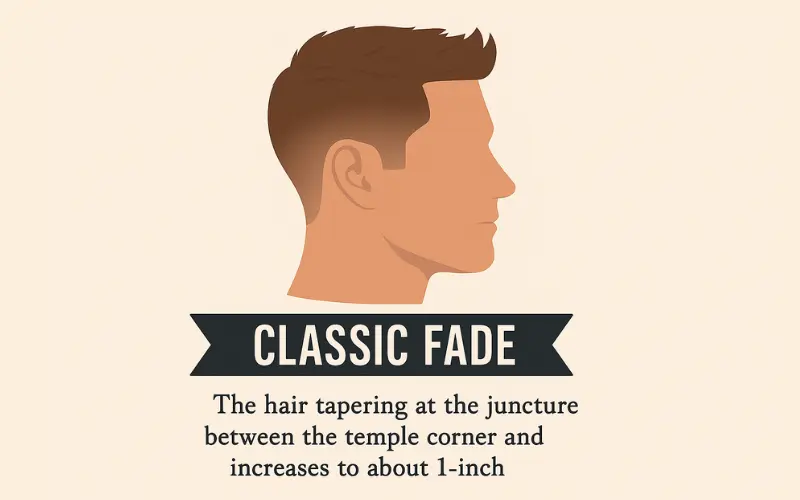
Best For: Men wanting a versatile, polished appearance that transitions seamlessly from office to evening
Styling Needs: Low product use, regular shaping every 3-4 weeks
Low Fade
The low fade starts just above the ears and curves down behind the head. This gives a clean, understated finish that enhances natural hairlines without drawing excessive attention. It’s particularly flattering for round and oval face shapes as it adds subtle structure without elongating the face dramatically.
The gradual taper of a low fade creates a sophisticated, mature appearance that’s ideal for conservative environments. It offers just enough definition to look intentional while remaining understated enough for any professional setting.
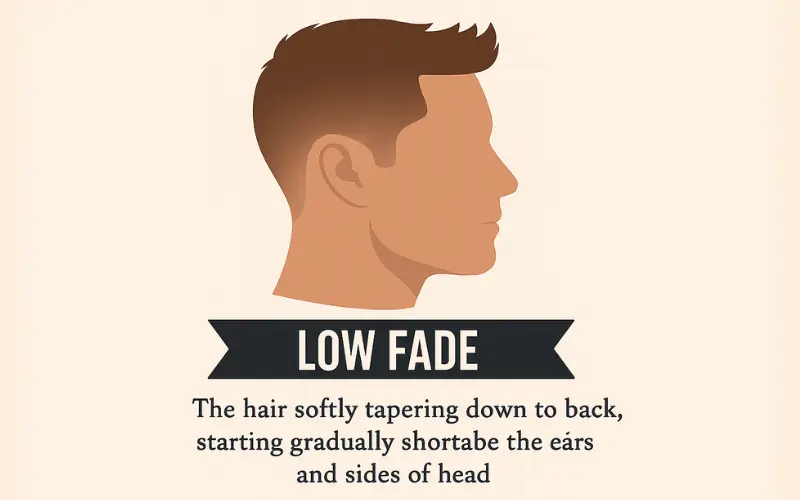
Ideal For: First-time fade wearers or those wanting a softer, more conservative look
Face Shape Benefits: Adds definition to round faces; complements oval faces naturally
Mid Fade
The mid fade begins halfway between the temples and ears, offering a balanced look between subtle and bold. It works well with textured crops, pompadours, and curly tops, providing a sharp yet wearable style. The mid fade is arguably the most versatile fade type, striking the perfect balance between conservative and contemporary.
This fade level provides enough contrast to make a statement while remaining appropriate for most work environments. It’s become the go-to choice for men who want a modern look without going to extremes.
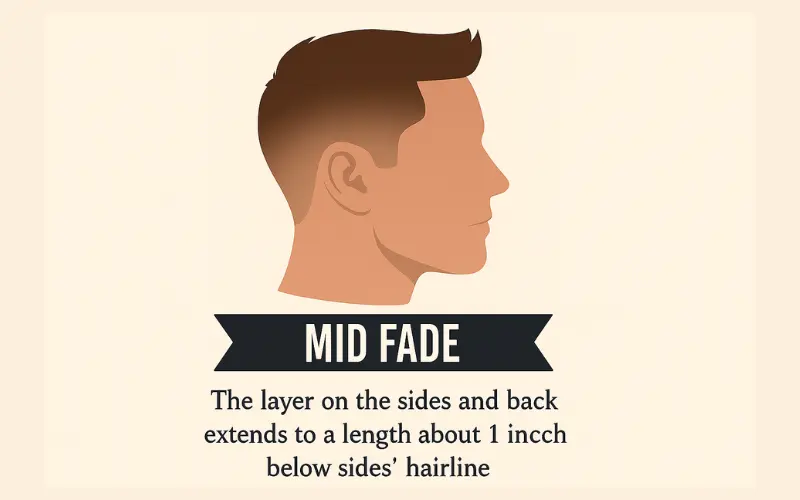
Styling Tip: Pair it with a fade beard line for a continuous, modern finish that frames your face
Best Paired With: Textured crops, side parts, quiffs, or natural curls
High Fade
The high fade starts closer to the crown and creates a dramatic contrast with the top. It’s bolder than its low and mid counterparts and is often seen in streetwear and fashion-forward circles. This fade makes a statement and requires confidence to pull off, as it draws significant attention to the hairstyle’s shape and the wearer’s facial features.
The high fade works particularly well when you want maximum attention on the styled top section. It creates clean lines and sharp angles that photograph exceptionally well, making it popular among influencers and style-conscious individuals.
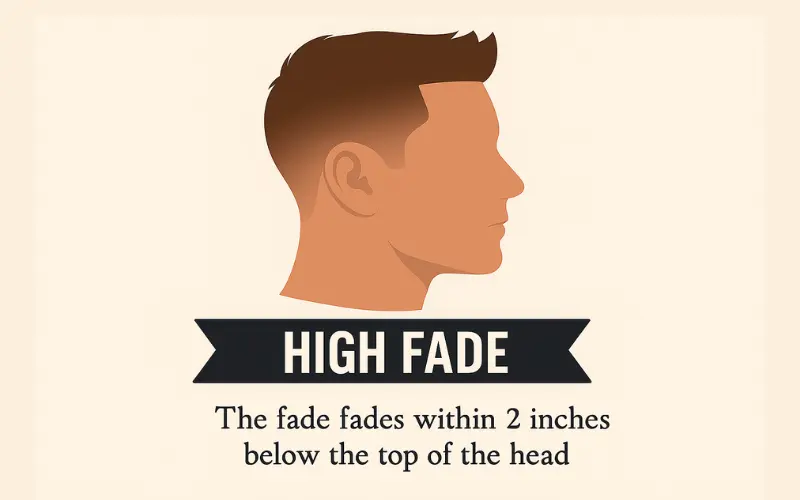
Who It Suits: Men with strong jawlines or those looking for a more pronounced, fashion-forward look
Pair With: Pompadours, textured quiffs, slick backs, or even buzz cuts for an edgy finish
Skin Fade
Also known as a skin fade, the skin fade blends the hair down to the bare skin, typically starting with the shortest clipper guard and working down to no guard at all. The result is a high-contrast, edgy finish that draws attention to the haircut’s structure and creates dramatic definition. It’s one of the sharpest fade options available and requires the most skill to execute properly.
The skin fade creates the cleanest, most defined look possible. The stark contrast between skin and hair makes every line crisp and intentional, resulting in a haircut that looks fresh from the barber for days.

Maintenance Level: High — requires regular trims every 1-2 weeks to maintain the sharp, clean appearance
Face Shape Compatibility: Square, diamond, or oval faces benefit most from the added definition
Taper Fade
Unlike the others, the taper fade focuses only on the sideburns and neckline. The hair gradually shortens at these points, maintaining a full head of hair on top and the rest of the sides. Think of it as the most conservative option in the fade family — it cleans up your hairline without dramatically altering your overall hair length.
The taper fade is perfect for men who want the polished finish of a fade without committing to significant length removal. It’s the ideal introduction to faded styles and works beautifully with longer hairstyles on top.
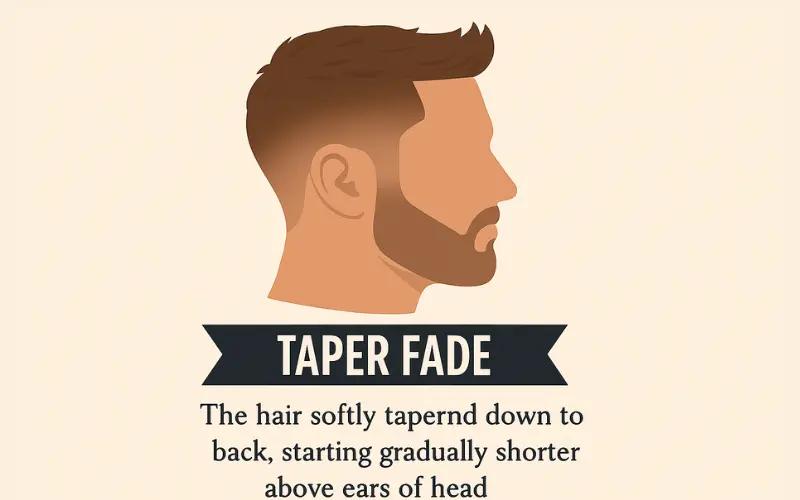
Why Choose It: Subtle and professional, perfect for business styles and conservative workplaces
Best For: Men who prefer minimal but polished fades; those growing out their hair.
Scissor Fade
As the name suggests, the scissor fade uses only scissors rather than clippers, offering a more natural, gradual transition. This method allows for a softer blend and is excellent for textured or wavy hair where clippers might create too harsh a line. The scissor fade requires exceptional skill and takes longer to complete, but the results are worth it for the right hair type.
This technique preserves more hair texture and creates a lived-in, effortlessly styled appearance. It’s particularly popular in European barbering traditions and among men with finer hair textures.

Ideal For: Men with fine, thick, or wavy hair who want a natural-looking fade
Barber Skill Level: High — this fade requires precision, experience, and patience
Drop Fade
The drop fade curves downward behind the ears, following the natural shape of the head rather than maintaining a straight line around. It creates a unique profile and enhances the definition of the fade at the back, adding visual interest from all angles. This artistic approach to fading creates a distinctive silhouette that sets it apart from traditional fades.
The drop fade’s curved line adds dimension and complements natural head shapes beautifully. It’s particularly effective for highlighting the back and sides while maintaining volume on top.

Best Paired With: Afro styles, curls, detailed partings, or voluminous hairstyles
Styling Tip: Keep the neckline clean to emphasize the curve and maintain the fade’s architectural quality
Burst Fade
Popularized by celebrity barbers and hip-hop culture, the burst fade wraps around the ear in a semi-circular pattern and tapers into the neckline. It maintains length at the back, making it perfect for mullets, mohawks, and faux hawks. The burst fade creates a “burst” or “sunburst” effect that radiates from behind the ear.
This fade type offers maximum creativity and works exceptionally well when you want to maintain length at the back while still getting the clean, faded sides. It’s become increasingly popular in modern barbering for its artistic appeal.

Face Shape Match: Round or heart-shaped faces benefit from the curved lines
Finish Style: Combine with sharp edge-ups or line-ups for best results; perfect for mohawks
Fade Haircut Maintenance
Maintaining a fade haircut is essential to keeping it looking sharp and structured. Fades typically lose their crisp edge after two to three weeks, depending on hair growth rate and the type of fade you choose. The sharper the fade, the more frequently you’ll need touch-ups.
Regular maintenance isn’t just about aesthetics — it’s about preserving the integrity of the style and ensuring your haircut always looks intentional rather than grown out.
Maintenance Tips:
- Schedule barber visits every 2–3 weeks for most fade types; skin fades may need weekly touch-ups
- Use a soft brush or styling comb to keep hair aligned and train growth patterns
- Apply lightweight products like matte paste, clay, or grooming cream to avoid weighing down the style
- Moisturize your scalp to prevent dryness and irritation, especially with skin fades that expose more scalp
- Invest in quality hair products designed for your hair type to maintain texture and health
- Clean up your neckline between barber visits using a handheld trimmer for extended freshness
- Protect your scalp from sun exposure if you have a high or skin fade
| Fade Type | Maintenance Level | Trim Frequency |
|---|---|---|
| Classic Fade | Low | Every 3 weeks |
| Skin Fade | High | Every 1–2 weeks |
| Taper Fade | Low | Every 3–4 weeks |
| Burst/Drop | Medium | Every 2–3 weeks |
Common Mistakes with Fade Haircuts
Even the most stylish fades can fall flat if approached incorrectly. Here are some common pitfalls to avoid:
Not communicating with your barber:
Use reference images or clear descriptions to explain the fade level and style you want. Don’t assume they’ll know what you mean by “just a fade.” Be specific about where you want the fade to start and how gradual you want the transition.
Choosing the wrong fade for your face shape:
A fade too high can overexpose your scalp and make round faces appear rounder; too low might flatten your profile and not provide enough contrast for longer face shapes. Consider your face shape when selecting fade height.
Overusing products:
Heavy gels and pomades can weigh down the fade’s upper volume or clog pores along faded sides, leading to breakouts. Choose lightweight, water-based products that enhance rather than overpower.
Skipping trims:
Fades lose definition quickly and can make the overall style look unkempt if not maintained. A grown-out fade doesn’t look “relaxed” — it looks neglected. Stay on schedule with your barber.
Ignoring hair texture:
Not all fades work equally well with all hair types. Discuss your natural hair texture with your barber to ensure the fade you choose will work with, not against, your hair’s natural tendencies.
Neglecting scalp care:
Faded sides mean more exposed scalp, which requires moisturizing and sun protection to prevent dryness, irritation, and sun damage.
Final Thoughts
Fade haircut types aren’t just a passing trend — they’re a cornerstone of modern men’s grooming. From the subtle elegance of a taper fade to the bold finish of a skin fade or burst fade, there’s a fade for every man’s taste, lifestyle, and professional requirements. By understanding the different types, knowing how to maintain them, and avoiding common mistakes, you can ensure your fade always looks sharp, clean, and effortlessly stylish.
The right fade does more than just cut your hair — it enhances your facial features, complements your personal style, and gives you the confidence that comes with looking your absolute best. Whether you’re walking into your local barbershop for the first time or you’re a fade veteran searching for a fresh new style, this guide equips you with the knowledge to choose the fade that suits your look best.
Remember, a great fade is a collaboration between you and your barber. Come prepared with reference images, be clear about your expectations, and trust the process. The investment in regular maintenance will pay dividends in how sharp and put-together you look every single day.
FAQs
How often should I get my fade touched up?
The frequency depends on your fade type and how fast your hair grows. Skin fades require the most maintenance at every 1-2 weeks, while low fades and taper fades can last 3-4 weeks. Mid and high fades typically need touching up every 2-3 weeks. If you want your fade to always look fresh from the barber, err on the side of more frequent visits.
What’s the difference between a fade and a taper?
A fade involves hair gradually transitioning from one length to significantly shorter (often down to skin), while a taper is more subtle and typically only shortens hair slightly around the edges and neckline. All fades are tapers, but not all tapers are fades. Fades create more dramatic contrast, while tapers offer a gentler, more conservative finish.
Can I do a fade haircut at home?
While it’s technically possible with the right tools (quality clippers, multiple guards, mirrors), fades require significant skill and practice to execute properly. The blending technique takes years to master. For your first fade or any complex fade type, it’s highly recommended to visit a professional barber. Once you have a fresh fade, you can maintain the neckline at home between visits.
Which fade is best for beginners?
The low fade or taper fade are ideal starting points for men new to faded haircuts. They’re subtle, easier to maintain, and won’t create dramatic changes to your appearance. If the style doesn’t suit you, it grows out more gracefully than higher, more aggressive fades. You can always go bolder with future haircuts once you’re comfortable with the concept.
Do fades work with all hair types?
Yes, fades can work with all hair types — straight, wavy, curly, or coily — but the technique may vary. Curly and coily hair often looks best with drop fades or burst fades that work with natural hair patterns. Fine hair benefits from scissor fades or classic fades that don’t remove too much density. Thick, straight hair can handle any fade type. Discuss your hair texture with your barber to determine the best approach.
How do I tell my barber what fade I want?
Be specific about three things: (1) where you want the fade to start (low, mid, or high), (2) how gradual you want the transition, and (3) what you’re doing with the hair on top. Bring reference photos showing multiple angles. Use terminology like “skin fade,” “drop fade,” or “taper fade” if you know them, and don’t be afraid to ask your barber for recommendations based on your face shape and hair type.
Will a fade make my hair look thinner on top?
A fade actually creates the illusion of thicker hair on top by providing contrast. The shorter sides make the top appear fuller and more voluminous by comparison. If you’re concerned about thinning hair, avoid overly aggressive fades like skin fades, and opt for low or mid fades instead. Adding texture and volume to the top section will further enhance this effect.
Can I get a fade with a beard?
Absolutely! Fading your beard into your haircut creates a seamless, cohesive look that’s very popular in modern barbering. This is called a “fade beard line” or “beard fade.” The fade should flow naturally from your sideburns into your beard, creating one continuous line. Communicate with your barber about connecting these areas for a polished, professional finish.
Are fades appropriate for professional work environments?
Yes, most fades are workplace-appropriate, especially low fades, taper fades, and classic fades. These styles are clean, neat, and professional. Mid fades work in most modern offices. High fades and skin fades may be less appropriate in very conservative corporate environments, but are generally acceptable in creative industries, tech, and most contemporary workplaces. When in doubt, start conservative and adjust based on your workplace culture.
What products should I use to style a fade?
The best products depend on your desired finish and hair type. For a natural, matte look, use clay or matte paste. For shine and hold, try pomade or gel. For light hold and texture, use sea salt spray or texturizing powder. Apply products primarily to the top section — avoid heavy application on faded sides. Start with a small amount and build up as needed. Water-based products are generally preferred as they wash out easily and won’t clog pores on your freshly faded scalp.