
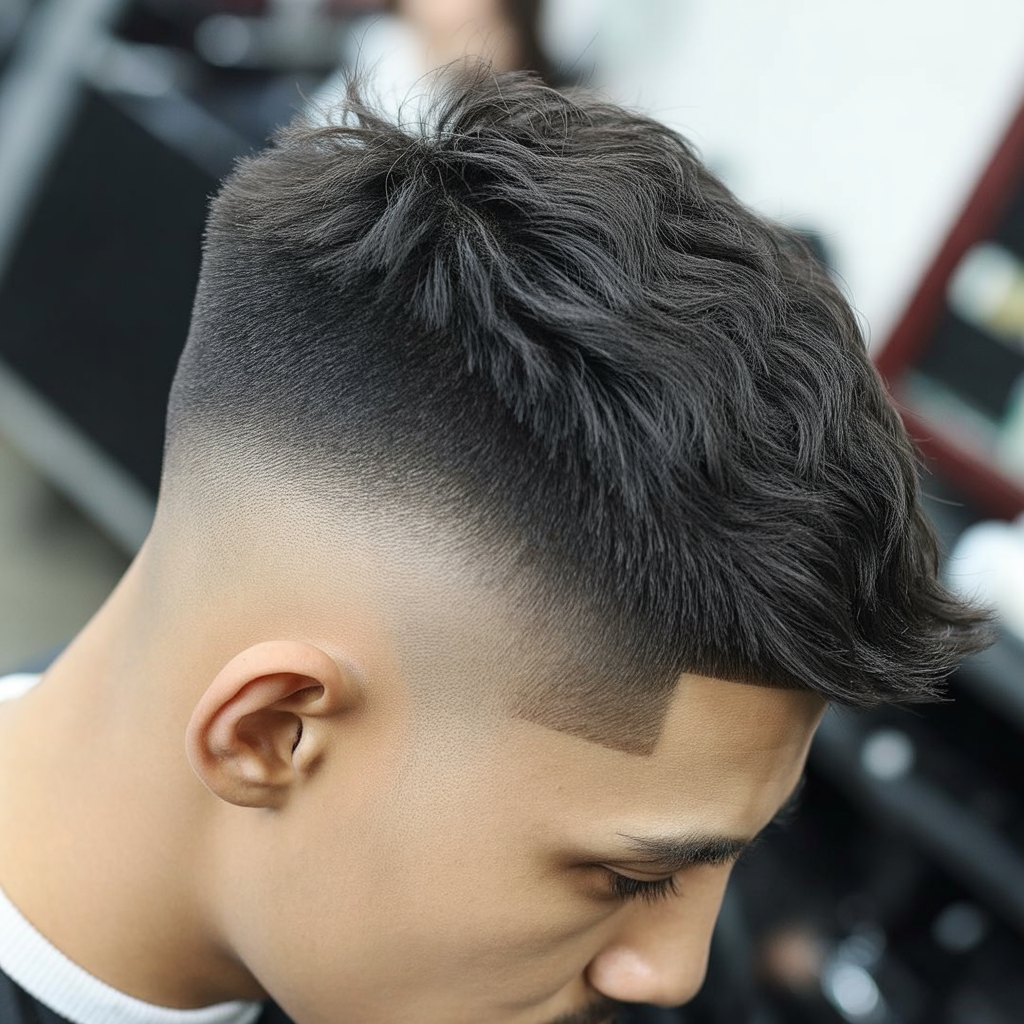
The low drop taper with messy hair has emerged as one of the most requested haircuts in modern barbershops, and for good reason. This distinctive style combines the clean, graduated fade of a low drop taper with the effortless texture of deliberately tousled hair on top, creating a look that’s both polished and relaxed. Whether you’re heading to the office or meeting friends for the weekend, this versatile haircut adapts to virtually any situation while maintaining its signature character.
Low Drop Taper with Messy Hair
Understanding the Low Drop Taper Foundation
Before we explore the messy hair component, it’s essential to understand what makes a low drop taper unique. Unlike a standard low taper fade that follows the natural curve of your head, the drop taper descends more steeply behind the ear, creating a distinctive arc that adds visual interest to your profile. This “drop” typically begins just above the ear and curves downward toward the nape of the neck, resulting in a more dramatic transition between the longer hair on top and the faded sides.
The “low” designation refers to where the fade begins, typically about an inch above the ear. This lower starting point creates a more conservative, professional appearance compared to mid or high fades, making it suitable for traditional workplace environments while still maintaining modern appeal. The gradual transition from skin or very short hair at the bottom to longer lengths as you move upward creates dimension that flatters most face shapes.
Why Messy Hair Complements the Drop Taper
The juxtaposition between the structured, clean lines of a low drop taper and the deliberately disheveled texture on top creates compelling visual contrast. This pairing has become increasingly popular because it softens what might otherwise be a very precise, almost severe haircut. The messy styling adds personality and approachability while the taper maintains professionalism.
According to James Richardson, a master barber with over fifteen years of experience at a London barbershop, “The messy top works brilliantly with a low drop taper because you’re getting the best of both worlds. Clients love that they can look put-together without appearing overly groomed. It’s particularly effective for men who want a contemporary style but work in industries where extreme haircuts aren’t appropriate.”
The textured, messy styling also provides practical benefits. It’s remarkably forgiving for men with natural cowlicks or unruly growth patterns that might be problematic with slicked-back or heavily structured styles. The intentional disorder means your hair doesn’t need to lay perfectly flat, turning what might be considered flaws into features that enhance the overall aesthetic.
Determining If This Style Suits You
While the low drop taper with messy hair is exceptionally versatile, certain hair types and face shapes benefit most from this combination. The good news is that with proper adaptation, most men can make this style work for them.
Hair Texture Considerations
Men with naturally straight to wavy hair often find this style easiest to maintain. The texture holds products well and creates volume without excessive effort. If you have straight hair, you’ll likely need to add texture through product and styling techniques to achieve that coveted messy appearance.
Those with curly hair can absolutely rock this look, though the approach differs slightly. The natural texture of curly hair creates built-in messiness, so the focus shifts to controlling volume and ensuring the curls don’t overwhelm the clean lines of the taper. Michael Torres, a curl specialist barber based in Manchester, notes, “For my clients with tighter curl patterns, I recommend keeping slightly more length on the sides of the taper, around a number three guard, so there’s a more gradual transition. This prevents the harsh contrast that can occur when you go too short with very curly hair.”
Fine hair presents unique opportunities with this style. While men with thin hair might worry about achieving adequate volume, the messy styling technique actually creates the illusion of thicker, fuller hair. Strategic layering on top and the right styling products can make even fine hair appear substantial.
Face Shape Compatibility
The low drop taper with messy hair flatters most face shapes, but understanding how it interacts with your features helps optimize the cut. Men with oval faces have the most flexibility, as this balanced face shape works with virtually any variation of the style.
Round faces benefit from additional height on top, which the messy styling naturally provides. Creating vertical volume elongates the face visually, counterbalancing roundness. Requesting your barber leave extra length at the crown and style it upward enhances this effect.
For square or angular face shapes, the soft texture of messy hair helps soften strong jawlines and prominent features. The contrast between the sharp fade lines and the tousled top creates balance. Men with heart-shaped or triangular faces should consider slightly more volume at the temples to add width to the upper portion of the face.
Long or oblong faces should avoid excessive height on top, as this further elongates the face. Instead, focus on width and horizontal texture in the messy styling, keeping the overall silhouette slightly more compact.
The Cutting Process: What to Expect in the Barber’s Chair
Understanding what happens during the cut helps you communicate effectively with your barber and ensures you receive exactly what you’re envisioning.
Initial Consultation
Your appointment should begin with a thorough consultation. Bring reference photos showing multiple angles of the low drop taper with messy hair. Don’t rely on a single image, as different angles reveal important details about the fade’s progression, the length on top, and how the messy texture is styled.
Discuss your hair’s natural characteristics with your barber: growth patterns, previous haircuts, styling abilities, and time you’re willing to invest in daily maintenance. An experienced barber will adapt the cut to work with your specific hair rather than against it.
Creating the Drop Taper
The barber typically begins with the sides and back, establishing the drop taper first. Using clippers with various guard sizes, they create a gradual transition that starts very short at the bottom (often a zero or skin fade) and progressively increases in length as it moves upward and forward.
The “drop” is created by following an imaginary curved line that descends behind the ear rather than staying level with it. This requires precision and a keen eye for symmetry, as both sides must mirror each other perfectly. Quality barbers will frequently step back to assess their work from different angles, ensuring the fade is even and the drop follows a natural, flattering curve.
The blending process is crucial. Rather than obvious lines between different lengths, a proper taper features seamless transitions. This is achieved through techniques like clipper-over-comb work, where the barber uses the comb to lift hair and create custom lengths that bridge the gaps between guard sizes.
Preparing the Top for Texture
Once the sides and back are complete, attention shifts to the top. For messy hair styling, the top should typically be left between three to six inches long, depending on your preference and hair type. This length provides enough weight to prevent the hair from standing completely upright while offering sufficient length to create texture and movement.
Point cutting or texturizing techniques remove bulk and create the choppy, piece-y texture essential for messy styling. Your barber might use thinning shears or a razor to achieve this effect, particularly through the mid-lengths and ends of the hair. This creates separation between strands rather than a blunt, uniform length.
The transition between the faded sides and the longer top requires careful attention. Rather than an abrupt change, there should be a graduated zone where shorter hair on the sides gradually connects to the length on top. This is often called the “weight line,” and its placement significantly impacts the overall shape and style.
Mastering the Messy Hair Styling Technique
Achieving that perfectly imperfect messy look requires technique, practice, and the right products. Here’s how to style your low drop taper with messy hair effectively.
Essential Products
The foundation of great messy hair styling is product selection. You’ll want items that provide texture, hold, and workability without making hair look stiff, greasy, or overly product-laden.
Matte clay or paste is typically the go-to product for this style. These formulations provide strong hold and create texture without shine, maintaining that natural, undone appearance. Look for products with descriptors like “texture,” “matte,” or “dry” in their names.
Sea salt spray deserves a place in your routine, particularly if you have straight or fine hair. Applied to damp hair before styling, it creates grit and texture that makes hair easier to manipulate and helps products grip better. The salt content slightly roughens the hair cuticle, creating the foundation for that lived-in, beach-inspired messiness.
Dry shampoo or texture powder can be game-changing for fine or limp hair. These products absorb oil at the roots and create volume and grip, making hair appear thicker and more substantial. They’re particularly useful for refreshing your style on second or third-day hair.
Step-by-Step Styling Process
Start with clean, towel-dried hair. While it’s tempting to work with completely dry hair, slightly damp hair accepts product better and is easier to manipulate. Your hair should be damp but not dripping.
If using sea salt spray, apply it now, distributing it evenly through the hair on top. Scrunch your hair gently as you apply to encourage natural texture and movement.
Use a blow dryer on medium heat, directing airflow upward and away from your scalp to create volume at the roots. Avoid using a brush, as this creates too much smoothness. Instead, use your fingers to rough-dry the hair, pushing it in different directions to build texture. For additional volume, try blow-drying with your head upside down.
Once hair is approximately 80% dry, apply your clay or paste. The key is using less product than you think you need. Start with a small amount (roughly the size of a pea or fingernail) and emulsify it thoroughly by rubbing it between your palms until it’s warm and spreadable.
Work the product through your hair using your fingers, starting at the back and working forward. Focus on the mid-lengths and ends rather than the roots. Use a raking motion with your fingers spread apart, pulling upward and forward to create separation and lift.
Create the messy texture by pinching small sections of hair between your fingers and twisting them slightly, then releasing. This creates the piece-y, separated strands characteristic of this style. Don’t overthink it or try to make every section perfect. Randomness is actually what you’re aiming for.
Finish by using your fingertips to adjust specific sections, pulling some forward, pushing others back or to the side. Create variety in the direction your hair is moving. The entire styling process should take five to ten minutes once you’re practiced.
Common Styling Mistakes to Avoid
Over-application of product is perhaps the most common error. Too much product weighs hair down, eliminating the volume and texture you’re trying to create. It can also make hair look dirty or greasy, completely undermining the intentionally messy aesthetic. Remember that you can always add more product, but removing excess is nearly impossible without washing.
Over-styling is another pitfall. The messy look should appear effortless, as though you simply ran your fingers through your hair and it naturally fell into place. Spending excessive time perfecting every strand or trying to make both sides identical defeats the purpose. Embrace slight asymmetry and imperfection.
Using the wrong products can sabotage your efforts. Gels typically create too much shine and can make hair stiff or crunchy. Heavy pomades or waxes weigh down hair and create a slick appearance that contradicts the messy, textured look you want. Stick with matte-finish, medium-hold products designed for texture.
Maintenance and Care Between Cuts
Keeping your low drop taper with messy hair looking sharp requires regular maintenance, though less than you might expect.
Optimal Cutting Schedule
The frequency of haircuts depends on how quickly your hair grows and how precisely you want to maintain the fade. Most men find that scheduling appointments every two to three weeks keeps the taper looking crisp and clean. As the hair grows, the fade becomes less defined and the contrast between short and long sections diminishes.
If you can tolerate a slightly grown-out look or prefer your fade less precise, you can extend this to four weeks. However, waiting much longer typically means you’ll need more extensive work done rather than just a touch-up, as the shape of the cut begins to deteriorate significantly.
The hair on top requires less frequent trimming. Most men can go four to six weeks between cuts for the top, having the barber refresh the taper while maintaining length on top. When you do trim the top, focus on removing weight and maintaining texture rather than shortening significantly.
Daily Hair Care
How often you wash your hair significantly impacts styling. Daily shampooing strips natural oils that help create and hold texture. Most men with this style find that washing hair two to three times per week works best, using a mild, sulfate-free shampoo that doesn’t completely strip hair.
On non-wash days, simply wet your hair in the shower or spray it with water, then restyle as usual. Your hair will often hold texture better when it has a day or two of natural oil accumulation.
Always use conditioner, but apply it only to the ends of your hair rather than the roots. Conditioning the roots can make hair limp and remove the grit and texture that makes messy styling possible. Focus conditioner on the last two to three inches of your hair where it tends to be driest.
Consider incorporating a leave-in conditioner or light hair oil if you have dry or damaged hair. These products add moisture without the weight of traditional conditioners, keeping hair healthy while maintaining its ability to hold texture and style.
Home Maintenance Options
Some men maintain their low drop taper between professional cuts by cleaning up the neckline and areas around the ears. If you’re comfortable with clippers and have someone who can help you, this can extend time between barber visits.
However, attempting to touch up the fade itself is generally not recommended unless you have significant experience. The gradual blending required for a proper taper is difficult to achieve at home, and mistakes are highly visible. When in doubt, leave the technical work to professionals.
Variations and Customization Options
The basic low drop taper with messy hair can be customized in numerous ways to reflect your personal style.
Length Variations on Top
Shorter messy hair (two to three inches) creates a more subtle, conservative version of this style. It’s easier to maintain and style but offers less dramatic texture and volume. This length works particularly well for men with very thick or coarse hair that might become unmanageable at longer lengths.
Medium length (three to five inches) represents the sweet spot for most men. It provides enough length for substantial texture and styling versatility without becoming difficult to manage. This length works across most hair types and face shapes.
Longer messy hair (five to seven inches) creates a more fashion-forward, statement look. It requires more styling time and better quality products to prevent limpness or excessive weight. Men with naturally wavy or curly hair often look exceptional with this length, as the natural texture creates built-in interest.
Fade Height Adjustments
While we’re focusing on low drop tapers, the drop can begin at different heights. A mid drop taper starts the fade around the temple level, creating more contrast and a slightly bolder look while maintaining the characteristic curved descent behind the ear.
The fade can also be adjusted in terms of how gradual or dramatic it is. A longer, more drawn-out fade creates subtle transitions, while a tight fade creates stark contrast over a shorter distance. Discussing these options with your barber helps achieve your ideal balance.
Adding Design Elements
Line-ups or edge-ups create crisp, defined hairlines at the temples and forehead. This adds precision that contrasts beautifully with the messy styling on top. The clean lines frame your face and emphasize the intentional nature of the “messy” top, making it clear this is a styled look rather than bedhead.
Some men incorporate subtle design elements into the fade itself, such as a simple line shaved into the taper or a small pattern. When done tastefully, these additions personalize the cut without overwhelming it. The key is restraint—a single, simple element typically looks more sophisticated than multiple competing designs.
Styling for Different Occasions
One of the greatest advantages of the low drop taper with messy hair is its adaptability across various settings.
Professional Environments
For workplace settings, keep the messy styling relatively controlled. Use slightly more product to add definition and prevent hair from looking unkempt. Style hair with a slight backward direction rather than allowing it to fall forward onto your forehead, which creates a more mature, professional appearance.
The low positioning of the taper and the natural texture of messy hair strike an ideal balance between contemporary and conservative, making this style appropriate for most business environments. Even traditional industries that might frown upon more extreme fades typically accept the low drop taper.
Casual and Social Settings
For weekends and social situations, you can embrace more dramatic, deliberately disheveled styling. Allow hair to fall more naturally, create more extreme piece-y texture, and experiment with different directions and volumes. This is when the messy aspect of the style really shines.
The beauty of this haircut is that the same cut looks appropriate in both professional and casual contexts simply by adjusting how you style the top. The structured base of the low drop taper ensures you always look intentional and put-together, regardless of how messy your styling gets.
Special Events
For formal occasions, consider slightly restraining the messy texture while maintaining some piece-y definition. You want to look polished without appearing stiff or overly groomed. A small amount of medium-shine pomade mixed with your usual matte clay can add subtle sheen appropriate for evening events while maintaining texture.
Addressing Common Challenges
Even with proper technique, you might encounter obstacles when working with this style.
Hair Won’t Hold Style
If your hair falls flat quickly or won’t maintain texture, several factors might be responsible. Using too much conditioner is a common culprit, as it makes hair too soft and slippery to hold products well. Try reducing conditioner use or applying it only to the very ends of your hair.
Your hair might also be too clean. Hair with a day or two of natural oil accumulation actually holds style better than freshly shampooed hair. Consider washing less frequently and using dry shampoo to refresh hair between washes.
The products you’re using might not be suitable for your hair type. Fine hair typically needs lighter products with strong hold, while thick hair requires heavier formulations. Don’t hesitate to experiment with different products until you find what works for your specific hair.
Uneven Growth or Awkward Stages
As your haircut grows out, you might experience periods where the style doesn’t sit quite right. The hair on top might become too long and heavy, or the fade might lose its crispness. Regular trims are the best prevention, but during awkward growth stages, try using slightly different styling techniques.
For hair that’s becoming too long, add more layers through styling by using a stronger pinching and twisting technique to create separation. Consider using products with stronger hold to maintain structure as hair gets heavier.
Managing Natural Growth Patterns
Cowlicks and unusual growth patterns can complicate messy hair styling, though they’re often less problematic than with slicked or structured styles. Work with your natural growth patterns rather than against them. If hair naturally wants to stick up in one area, incorporate that into your messy styling rather than fighting to flatten it.
Discuss persistent problem areas with your barber. Sometimes strategic layering or slightly different cutting techniques in specific zones can minimize the impact of difficult growth patterns.
The Cultural Context and Evolution of This Style
Understanding where this haircut comes from and why it’s become so popular provides perspective on its enduring appeal.
The low drop taper has roots in traditional barbering techniques but gained mainstream popularity in the 2010s as men’s grooming became increasingly sophisticated. The fade itself evolved from military haircuts and barbershop culture, particularly within African American communities where intricate fades and precise line work have long been celebrated as art forms.
The messy, textured top represents a reaction against the overly groomed, slicked-back looks that dominated earlier in the decade. As men’s fashion has embraced more relaxed, less formal styles overall, haircuts have followed suit. The deliberately undone texture of messy hair reflects broader cultural shifts toward authenticity and individual expression over rigid adherence to grooming standards.
Combining these elements creates a style that honors traditional barbering craft through the precise fade while embracing contemporary preferences for textured, natural-looking styling. This fusion of old and new, structured and relaxed, explains much of the style’s widespread appeal across age groups and demographics.
Expert Perspectives on Longevity and Future Trends
Speaking with professional barbers provides insight into whether this style will remain relevant or fade from popularity.
David Martinez, a session stylist who works with celebrities and models, observes, “The low drop taper with textured hair has remarkable staying power because it’s fundamentally versatile and flattering. Unlike some trendy cuts that work only on specific hair types or face shapes, this one can be adapted to suit almost anyone. That universal wearability suggests it won’t disappear anytime soon.”
Sarah Chen, who runs an award-winning barbershop in Edinburgh, adds, “We’re seeing increased interest in customization within this basic framework. Clients want the low drop taper with messy hair, but they also want it personalized to their unique features and lifestyle. That evolution and customization keeps the style fresh even as the core elements remain consistent.”
The consensus among professionals is that while specific variations might shift in popularity, the fundamental combination of structured fades with textured, natural-looking tops represents an enduring approach to men’s hair that transcends temporary trends.
Building Confidence in Your Style
Perhaps the most important element of successfully wearing a low drop taper with messy hair is confidence. This style works best when you embrace its intentionally imperfect nature rather than constantly worrying about every strand being in place.
Remember that “messy” doesn’t mean sloppy or uncared-for. It’s a deliberate styling choice that requires skill to execute properly. You’re not failing to style your hair well; you’re successfully creating a specific aesthetic that celebrates texture, movement, and natural-looking imperfection.
Give yourself time to learn what works for your specific hair and face. The first few times you style this cut might feel awkward or wrong, but as you develop familiarity with your hair’s behavior and discover techniques that work for you, the process becomes intuitive and quick.
Don’t compare your hair too directly to reference photos or other men wearing similar styles. Your hair is unique, and what looks amazing on someone else might not be your best option. Work with your barber to create a version of this style that maximizes your hair’s strengths and works with its natural characteristics.
Conclusion
The low drop taper with messy hair represents one of the most versatile, flattering, and contemporary options in men’s hairstyling. By combining the clean, structured foundation of a precision fade with the relaxed, textured appeal of deliberately tousled styling, this haircut offers the best of both worlds: polish and personality, structure and freedom.
Whether you have straight hair or curls, fine texture or thick locks, an oval face or angular features, this style can be adapted to work for you. Success requires finding a skilled barber who understands how to create the proper fade and cut the top for texture, investing in quality styling products suited to your hair type, and dedicating a few minutes daily to styling.
The result is a haircut that looks equally appropriate in professional settings and casual environments, that flatters most face shapes and works with various hair types, and that strikes the increasingly important balance between looking well-groomed without appearing overly fussy or high-maintenance.
As you maintain your low drop taper with messy hair through regular cuts and daily styling, you’ll develop an understanding of your hair and a personal approach to the style that makes it uniquely yours. That’s ultimately what makes this haircut so enduring and appealing—it’s both a definable, recognizable style and a flexible framework for individual expression.
FAQs
How long does hair need to be on top for messy styling?
For effective messy styling, you’ll need at least three inches of length on top, though four to six inches provides optimal versatility. This length allows you to create texture and piece-y separation while maintaining enough weight to prevent hair from standing completely upright. Men with very curly hair may find that slightly shorter lengths work because natural curl creates built-in volume and texture.
What’s the difference between a low taper and a low fade?
The terms are often used interchangeably, but technically a taper refers to hair gradually getting shorter toward the neckline while maintaining some length throughout, whereas a fade goes down to the skin or extremely short hair. In practice, most modern “tapers” incorporate fading techniques, making the distinction less relevant. The “drop” descriptor refers to how the fade curves downward behind the ear rather than staying level.
How often should I wash my hair with this style?
Most men achieve best results washing hair two to three times per week with a gentle, sulfate-free shampoo. Washing daily strips the natural oils that help create and hold texture, making styling more difficult. On non-wash days, simply wet your hair and restyle as usual. Your hair will often hold style better with a day or two of natural oil accumulation, creating the grip needed for textured, messy styling.
Can this style work with receding hairline or thinning hair?
Absolutely. The low drop taper actually works quite well for men experiencing hair loss because the fade on the sides draws attention to the healthy hair on top. The messy styling creates volume and the illusion of thickness, while the textured, piece-y styling disguises areas of thinning better than slicked-back or flat styles. Discuss your specific concerns with your barber, who can adjust the cut to maximize coverage while maintaining style.
What products should I avoid with messy hair styling?
Avoid heavy pomades, gels, and products with high shine, as these create a slick, wet appearance that contradicts the textured, natural look you want. Traditional gels can make hair stiff and crunchy, eliminating movement. Products labeled as “smoothing” or “anti-frizz” also work against you by removing the texture and separation essential for messy styling. Stick with matte clays, pastes, and texture sprays designed specifically for creating lived-in, undone looks.
How do I maintain the style overnight?
Most men find that the messy hair element doesn’t survive sleeping particularly well, but this actually isn’t a problem. Part of this style’s appeal is how quickly it can be restyled in the morning. If you want to minimize morning styling time, try using a silk or satin pillowcase, which creates less friction and helps hair maintain some texture. In the morning, wet your hair slightly, apply fresh product if needed, and restyle—the entire process takes just a few minutes.
Is the low drop taper appropriate for professional workplaces?
Yes, the low positioning of the fade makes this one of the more conservative fade options, suitable for most professional environments including business, healthcare, education, and corporate settings. The fade begins relatively low on the head and creates clean, defined lines that appear well-groomed. The messy top, despite its name, looks intentional and styled rather than unkempt when executed properly. For particularly conservative workplaces, you can style the messy hair with slightly more control while maintaining the cut’s essential characteristics.
Can I achieve this style with very curly or coily hair?
Yes, though the approach differs slightly from styling straight or wavy hair. Natural curl creates built-in texture, so the focus shifts to maintaining definition and controlling volume rather than creating texture from scratch. Your barber might recommend keeping slightly more length on the sides of the taper (around a three guard) to create smoother transitions with very curly hair. For the top, curl-specific products that define and moisturize work better than traditional matte clays. The result is a style that celebrates natural texture while maintaining the clean, faded sides.
What face shapes look best with this haircut?
The low drop taper with messy hair is exceptionally versatile and can be adapted to flatter virtually any face shape. Oval faces work with any variation. Round faces benefit from additional height on top to elongate the face. Square and angular faces are softened by the textured, messy styling. Heart-shaped faces should consider slightly more volume at the temples. Long faces should avoid excessive height, focusing instead on width and horizontal texture. Work with your barber to customize the cut’s proportions for your specific facial structure.
How much does this haircut typically cost?
Pricing varies significantly based on location and barber experience, but expect to pay between £25-50 for a quality cut in the UK. In major cities or with highly experienced barbers, prices may be higher. Remember that a proper low drop taper requires significant skill and precision—this isn’t a haircut where you want to prioritize saving money over quality. The fade must be executed properly to look clean and last well between cuts. Many barbershops offer slightly reduced pricing for returning clients who maintain regular cutting schedules.