

The high taper fade remains one of the most requested cuts in modern barbershops, and for good reason. This versatile haircut delivers clean lines and sharp contrast by beginning the fade well above the ears, creating visual impact that works across all hair types and personal styles.
High Taper Fade Haircuts
What Makes the High Taper Fade Special?
Unlike traditional fades that start lower on the head, the high taper fade creates maximum contrast between your crown and sides. This dramatic gradient works beautifully whether you have straight, wavy, or coiled hair, offering a foundation that supports everything from professional polish to streetwear edge.
The Evolution of a Classic Cut
Military barbers pioneered the short-back-and-sides aesthetic that would eventually evolve into today’s high taper fade. The style gained cultural momentum throughout the 1980s and 1990s, becoming synonymous with hip-hop culture and urban fashion. Today’s versions honor that heritage while incorporating contemporary textures and techniques that keep the look fresh.
Choosing Your High Taper Fade: What to Consider
Understanding Your Hair Type
Men with thick or coarse hair find this cut particularly effective, as it removes bulk while maintaining control. Textured and curly hair types create stunning visual contrast—the tight fade emphasizes the natural volume and movement on top.
Matching Your Face Shape
Round and oval faces benefit from the vertical emphasis a high fade provides, creating length and balance. Square-faced men can soften angular features by combining their fade with facial hair, achieving harmonious proportions.
Committing to Maintenance
Sharp fades require commitment. Plan for barber visits every two to three weeks to preserve clean lines. Invest in quality styling products that match your desired finish clays for texture, pomades for shine and control.
15 High Taper Fade Styles Worth Trying
1. Curly Top High Fade

The interplay between tight sides and natural curls creates dimensional contrast. This style, popularized by athletes and actors like Odell Beckham Jr., celebrates texture rather than fighting it.
Best for: Naturally curly or wavy hair with medium to thick density
Face shapes: Oval, square, round
Styling approach: Define curls with cream or mousse, finish with light-hold spray to control frizz without sacrificing movement
2. Buzz Cut with High Fade
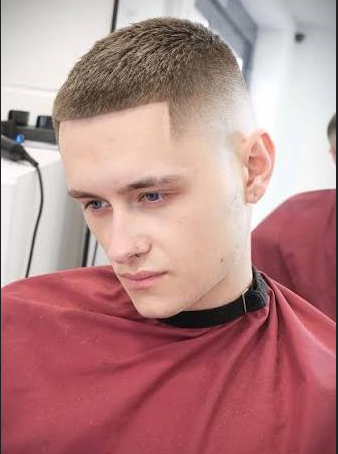
Minimalism meets precision in this low-maintenance option. The ultra-short top paired with a high fade creates clean geometry that’s both practical and stylish.
Best for: All hair types and densities
Face shapes: Oval, square, heart
Styling approach: Keep your scalp moisturized with lightweight products; the cut does the work for you
3. Textured Crop Fade
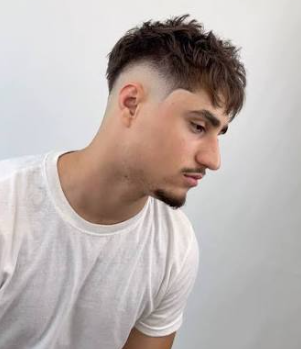
Choppy layers on top contrast beautifully with the sharp fade, delivering a modern, editorial aesthetic. Celebrities like Cillian Murphy have shown how this cut translates across different settings.
Best for: Straight to wavy hair, medium density
Face shapes: Round, oval
Styling approach: Matte clay or texturizing paste creates separation and movement; light spray adds hold
4. Pompadour with High Fade
Vintage volume meets contemporary edge. The swept-back pompadour makes a statement while the high fade keeps it grounded in modern style.
Best for: Straight or slightly wavy hair, medium to thick
Face shapes: Oval, square
Styling approach: Blow-dry for lift, sculpt with strong-hold pomade, lock with hairspray
5. Quiff and High Fade
This versatile combination offers height and movement without the commitment of a full pompadour. Style it polished or relaxed depending on your occasion.
Best for: Straight to wavy hair, medium to thick density
Face shapes: Round, oval
Styling approach: Create volume with a blow dryer, shape with medium-hold pomade or clay
6. Caesar Cut Fade
The signature straight fringe paired with a high fade creates a distinctive silhouette that’s both practical and fashion-forward.
Best for: Straight to slightly wavy hair, medium density
Face shapes: Oval, square
Styling approach: Lightweight cream or matte paste maintains the fringe without adding excessive shine
7. Long Top with High Fade
Maximum styling flexibility defines this option. The length on top opens possibilities while the fade maintains structure.
Best for: All textures, medium to thick density
Face shapes: Oval, rectangular
Styling approach: Direction and product choice determine your final look—pomade for sleek, clay for texture
8. Waves with High Fade
Natural wave patterns gain definition and purpose when paired with sharp faded sides, creating refined texture.
Best for: Wavy or slightly curly hair, medium density
Face shapes: Oval, square, heart
Styling approach: Curl-enhancing cream defines waves; matte pomade adds hold
9. Afro with High Fade
Bold volume on top contrasts dramatically with clean sides, celebrating natural texture while maintaining sharp lines.
Best for: Tightly coiled or curly hair, medium to thick
Face shapes: Round, oval, square
Styling approach: Curl cream or leave-in conditioner maintains moisture and definition
10. Short Spikes Fade
Textured, upward-pointing hair adds playful energy to the structured foundation of a high fade.
Best for: Straight to slightly wavy hair, medium density
Face shapes: Oval, square, rectangular
Styling approach: Matte wax or clay creates spikes; light hairspray provides extra hold
11. Undercut with High Fade
Sharply disconnected sides meet versatile length on top, offering multiple styling directions from one cut.
Best for: Straight or wavy hair, medium to thick
Face shapes: Oval, square, rectangular
Styling approach: Pomade or clay provides control; blow-drying adds lift
12. Messy Texture Fade
Deliberately tousled top hair creates effortless style when balanced against precise sides.
Best for: Straight to wavy hair, medium density
Face shapes: Oval, square, heart
Styling approach: Lightweight paste or texturizing cream creates separation; finger-style for natural movement
13. Hard Part Fade
A shaved line adds architectural precision, separating the longer top from faded sides with deliberate contrast.
Best for: Straight or slightly wavy hair, medium to thick
Face shapes: Oval, square, rectangular
Styling approach: Define the part with a comb; pomade or wax maintains structure
14. Faux Hawk Fade
Edgy without going extreme—a tapered strip of longer hair creates vertical interest and modern attitude.
Best for: Straight to wavy hair, medium to thick
Face shapes: Oval, square, rectangular
Styling approach: Medium-hold clay shapes the center strip; lift the front for added height
15. Side-Swept Fade
Classic sophistication adapted for contemporary taste. The directional top provides polish while the fade adds modern edge.
Best for: Straight to slightly wavy hair, medium density
Face shapes: Oval, square, heart
Styling approach: Lightweight pomade or cream combs smoothly; blow-dry for volume
Keeping Your Fade Fresh
Schedule Consistent Touch-Ups
Book appointments every two to three weeks. This prevents uneven growth and maintains the crisp definition that makes high fades distinctive.
Match Products to Your Style
Choose styling products based on your desired finish. Structured looks benefit from pomades and waxes, while natural styles work better with lightweight creams and mousses.
Detail Your Edges
Well-groomed hairlines and beard edges elevate the entire look. These finishing touches maintain precision between barber visits.
Build Volume Strategically
For styles with length on top, volumizing sprays or powders enhance height and emphasize the contrast your fade creates.
FAQs
How long does a high taper fade last?
A high taper fade typically looks sharp for one to two weeks before growing out becomes noticeable. Most men schedule barber appointments every two to three weeks to maintain the clean, defined appearance. The exact timing depends on your hair growth rate and how precise you want the fade to look.
What’s the difference between a high fade and a high taper fade?
The terms are often used interchangeably, but technically a taper refers to a gradual reduction in hair length, while a fade blends to skin. A high taper fade combines both elements—it starts high on the head and gradually tapers down, often blending to skin at the bottom. Both create similar visual effects with sharp contrast at the top of the head.
Can you get a high taper fade with thin hair?
Absolutely. High taper fades work well on thin hair because the fade removes weight from the sides, creating the illusion of fuller hair on top. The key is choosing the right top style—textured crops, quiffs, or side-swept styles can add visual volume. Discuss your hair density with your barber to find the most flattering combination.
What should I ask my barber for a high taper fade?
Be specific: tell your barber you want a “high taper fade” and indicate where you’d like the fade to start (typically one to two inches above the ears). Bring reference photos showing the exact style you want on top. Specify whether you want the fade to blend to skin or stop at a short clipper length. Clear communication ensures you get the look you’re after.
Is a high taper fade professional enough for work?
Yes, a high taper fade is widely accepted in professional environments when styled appropriately. Pair it with conservative top styles like a side-swept look, textured crop, or classic quiff rather than bold options like faux hawks or extreme spikes. The clean lines and sharp appearance actually convey attention to detail and personal grooming, which most workplaces value.