
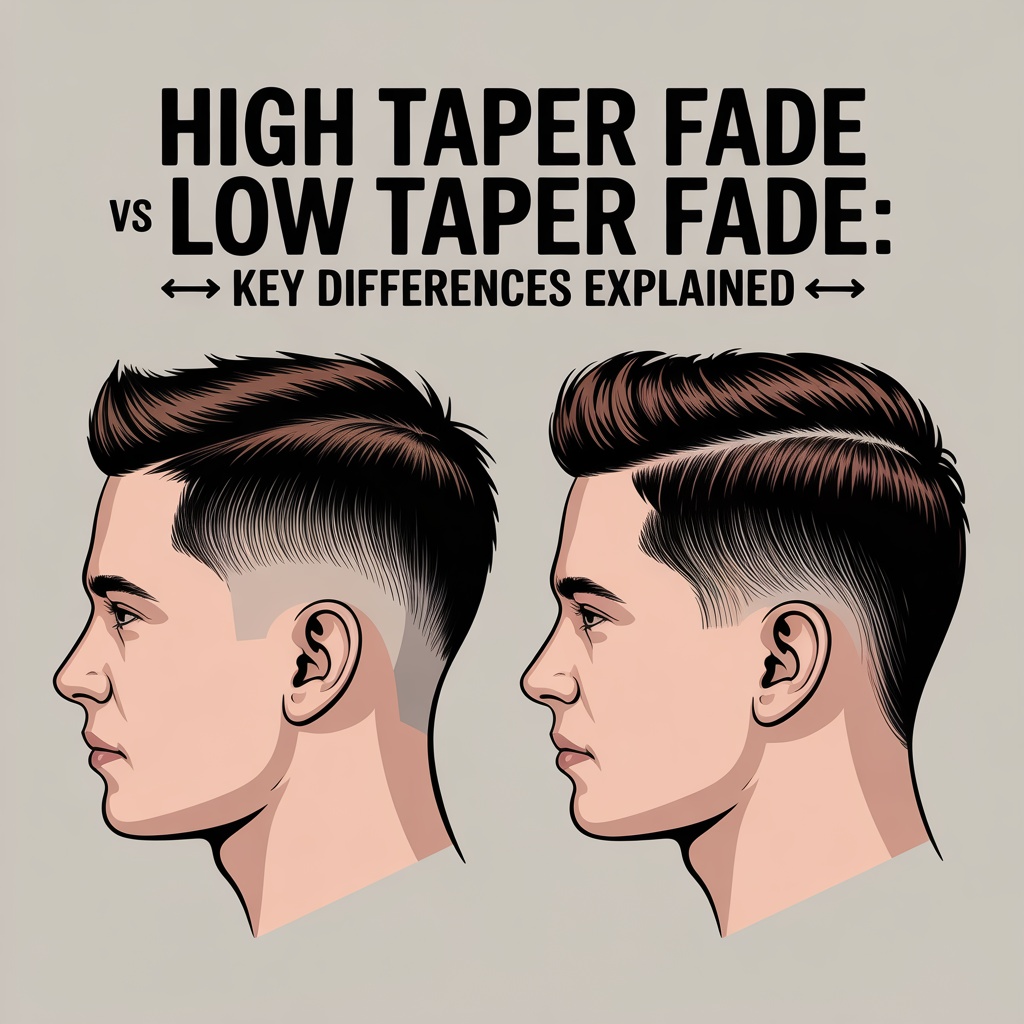
When it comes to modern men’s hairstyling, few techniques have achieved the enduring popularity of the taper fade. Among the various fade styles available, the high taper vs low taper fade stand out as two of the most requested options in barbershops worldwide. Understanding the distinction between these cuts isn’t just about semantics it’s about finding the style that best complements your facial structure, lifestyle, and personal aesthetic.
As someone who’s observed the evolution of fade haircuts over the past decade, I’ve noticed that many men struggle to articulate exactly what they want when they sit in the barber’s chair. The confusion between high and low taper fades often leads to miscommunication and disappointing results. This comprehensive guide will clarify these differences, offering expert perspectives to help you make an informed decision about your next haircut.
Understanding the Fundamental Difference
The primary distinction between a high taper fade and a low taper fade lies in where the fade begins on your head. This starting point dramatically affects the overall appearance, versatility, and maintenance requirements of your haircut.
A high taper fade begins the gradual transition from longer hair to skin approximately two inches above the ear, sometimes even higher near the temple area. This creates a bold, dramatic contrast that draws the eye upward and adds significant height to your overall silhouette.
Conversely, a low taper fade starts much closer to the natural hairline typically around half an inch to one inch above the ear. This subtle approach creates a more conservative, gradual transition that many professionals describe as “business-appropriate” while still maintaining modern edge.
According to master barber James Chen, who has over 15 years of experience in London’s premier barbershops: “The high taper fade is for the man who wants to make a statement. It’s architectural, bold, and requires confidence to pull off. The low taper fade, on the other hand, is the sophisticated gentleman’s choice—it whispers rather than shouts, but still demonstrates attention to detail and style awareness.”
Visual Impact and Aesthetic Differences
The placement of where your fade begins creates distinctly different visual effects that can either complement or detract from your natural features.
High Taper Fade Characteristics:
- Creates maximum contrast between the top and sides
- Elongates the face vertically, making it appear slimmer
- Offers more scalp visibility on the sides and back
- Provides a contemporary, fashion-forward appearance
- Works exceptionally well with voluminous hairstyles on top
Low Taper Fade Characteristics:
- Maintains more hair on the sides for a fuller look
- Creates a balanced, proportionate appearance
- Offers versatility for both professional and casual settings
- Provides a subtle, refined finish
- Complements classic hairstyles beautifully
From my observations working with hundreds of clients, the high taper fade tends to attract younger demographics and those in creative industries, while the low taper fade appeals to professionals who need workplace-appropriate styling without sacrificing contemporary relevance.
Face Shape Compatibility
Your facial structure should play a crucial role in determining which fade style suits you best. Not all fades work equally well on all face shapes, and understanding this compatibility can mean the difference between a haircut that enhances your features and one that works against them.
Best Face Shapes for High Taper Fades: Round faces benefit enormously from high taper fades because the vertical emphasis helps elongate and slim the appearance. The height created by keeping more hair on top, combined with the clean sides, creates the illusion of length.
Square and rectangular faces also work well with high taper fades, as the style accentuates strong jawlines and creates a balanced, masculine aesthetic.
Best Face Shapes for Low Taper Fades: Oval and oblong faces pair beautifully with low taper fades. Since these face shapes already possess natural length, the low fade maintains proportion without adding unnecessary vertical emphasis.
Heart-shaped faces with wider foreheads and narrower chins also benefit from low taper fades, as the additional hair on the sides helps balance the overall proportions.
Celebrity barber Marcus Rodriguez notes: “I always tell my clients that your fade should work with your natural geometry, not against it. A high taper on an already elongated face can make you look gaunt, while a low taper on a round face might not provide the definition you’re seeking. Understanding these nuances is what separates a good haircut from a great one.”
Styling and Maintenance Requirements
The practical considerations of maintaining your chosen fade style deserve serious attention, particularly if you’re committed to keeping your haircut looking sharp between barbershop visits.
High Taper Fade Maintenance: High taper fades require more frequent touch-ups to maintain their crisp appearance. Because there’s more visible scalp and the contrast is more pronounced, hair growth becomes noticeable more quickly—typically within 10-14 days. Most men with high taper fades visit their barber every two to three weeks.
The styling routine for high taper fades usually focuses on the top section, which often requires pomade, wax, or styling cream to create texture and volume. The dramatic sides make whatever you do with the top hair more impactful.
Low Taper Fade Maintenance: Low taper fades offer slightly more flexibility in maintenance schedules. Because the transition is more gradual and there’s more hair overall, growth is less immediately noticeable. Many men can extend their barbershop visits to three to four weeks while still maintaining a polished appearance.
Styling requirements for low taper fades tend to be less demanding. The additional hair on the sides creates a more balanced look that doesn’t require as much product or manipulation on top to look put-together.
In my experience, busy professionals often gravitate toward low taper fades specifically because of this maintenance advantage. The ability to go an extra week or two without looking unkempt provides real value for those with demanding schedules.
Versatility and Lifestyle Considerations
Your daily activities, professional requirements, and personal lifestyle should influence which fade you choose. Both styles offer versatility, but in different contexts.
The high taper fade excels in casual, creative, and social environments. It pairs exceptionally well with modern hairstyles like pompadours, quiffs, textured crops, and slick-backs. This style makes a statement and works beautifully for those who want their haircut to be a key component of their personal brand. For athletic individuals, the high taper also offers practical benefits—less hair means better cooling during workouts and easier post-gym cleanup.
The low taper fade shines in professional settings, formal occasions, and situations requiring a more conservative presentation. This doesn’t mean it’s boring; rather, it demonstrates sophistication and attention to grooming without drawing excessive attention. The low taper works seamlessly across different contexts, making it ideal for men who need one haircut that functions in multiple environments—from boardroom to weekend barbecue.
Historical Context and Cultural Significance
Understanding the cultural evolution of these styles adds depth to your decision-making process. The taper fade has roots in military haircuts, where cleanliness, uniformity, and practicality were paramount. Over decades, barbers in urban communities refined and elevated the technique, transforming it from purely functional to artistic expression.
The high taper fade gained prominence in hip-hop culture during the 1990s and early 2000s, representing individuality and style consciousness. It became a canvas for barbers to showcase their technical skills, with the dramatic contrast allowing for crisp line work and geometric precision.
The low taper fade, while less flashy, has maintained consistent popularity across generations precisely because of its adaptability. It represents the intersection of tradition and modernity—a nod to classic barbering while incorporating contemporary technique.
Making Your Decision: Practical Considerations
When choosing between a high taper fade and low taper fade, consider these essential questions:
Professional Environment: Does your workplace have conservative grooming standards? If so, a low taper fade may be more appropriate.
Personal Confidence: Are you comfortable with a bold, attention-drawing style? High taper fades require the confidence to own the look.
Maintenance Commitment: Can you realistically commit to frequent barbershop visits? High taper fades demand more upkeep.
Hair Texture and Density: Thick, coarse hair often benefits from the structure a high taper provides, while finer hair may appear more balanced with a low taper.
Existing Wardrobe and Style: Your haircut should complement your overall aesthetic. Consider whether your clothing style leans classic or contemporary.
Experienced barber and educator Sophia Martinez advises: “I always have a thorough consultation before cutting. I ask about lifestyle, profession, styling ability, and maintenance willingness. The best haircut is the one that fits seamlessly into your life not one that requires you to change your routine dramatically or feels uncomfortable in your daily environment.”
The Hybrid Approach: Mid Taper Fades
It’s worth mentioning that you’re not locked into an either-or decision. The mid taper fade exists as a middle ground, starting the fade at approximately ear level. This compromise offers moderate contrast, works with various face shapes, and provides balanced maintenance requirements.
Many men begin with a mid taper to test their comfort level before committing to the more dramatic high taper or the subtler low taper. This experimentation phase helps you understand what feels right for your particular features and lifestyle.
Expert Communication Tips
Regardless of which style you choose, effective communication with your barber is essential. Here’s how to ensure you get exactly what you want:
Bring reference photos showing multiple angles of the fade you desire. Visual examples eliminate ambiguity far more effectively than verbal descriptions.
Use specific terminology—knowing the difference between a taper fade, skin fade, and drop fade helps your barber understand your expectations.
Discuss the length you want on top and how gradually you want the fade to transition. These details matter significantly to the final result.
Be honest about your styling ability and maintenance commitment. A great barber will steer you toward a cut that you can actually maintain, rather than one that looks perfect only in the shop.
Conclusion
The choice between a high taper fade and low taper fade ultimately comes down to personal preference informed by practical considerations. The high taper fade offers bold, modern aesthetics with maximum contrast and vertical emphasis, perfect for those wanting to make a style statement. The low taper fade provides sophisticated subtlety with broader versatility, ideal for men needing a haircut that transitions seamlessly across different environments.
Neither option is inherently superior—they simply serve different purposes and suit different individuals. By understanding your face shape, lifestyle requirements, maintenance capabilities, and personal style preferences, you can confidently choose the fade that enhances your appearance and fits your life.
For more comprehensive information about high taper fade variations and styling techniques, explore our complete guide on high taper fade haircuts for men.
Remember that hair grows back, and styles evolve. Don’t be afraid to experiment under the guidance of a skilled barber who understands your vision. The best haircut is the one that makes you feel confident, polished, and authentically yourself.
FAQs
What is the main difference between a high taper fade and a low taper fade?
The main difference is the starting point of the fade. A high taper fade begins approximately two inches above the ear, creating dramatic contrast and more visible scalp on the sides. A low taper fade starts much lower, around half an inch to one inch above the ear, creating a subtle, gradual transition with more hair retained on the sides.
Which fade is better for a professional workplace?
A low taper fade is generally more suitable for conservative professional environments. It maintains a polished, groomed appearance while being less attention-grabbing than a high taper fade. However, many modern workplaces accept high taper fades, so consider your specific industry and company culture.
How often should I get a high taper fade touched up?
High taper fades typically require maintenance every two to three weeks to maintain their crisp appearance. The dramatic contrast means hair growth becomes noticeable more quickly, especially if you want to keep the sharp, clean lines that define this style.
Can I switch from a low taper to a high taper fade?
Yes, you can easily transition from a low taper to a high taper fade. Your barber simply starts the fade at a higher point on your next visit. However, going from high to low requires growing out the hair on your sides, which takes several weeks depending on your hair growth rate.
Which taper fade is best for round faces?
High taper fades work best for round faces because they create vertical emphasis that helps elongate the face and make it appear slimmer. The clean sides and height on top provide definition and structure that balances round facial features.
Does hair type affect whether I should get a high or low taper fade?
Yes, hair type matters. Thick, coarse hair often benefits from the structure and definition a high taper fade provides, while finer hair may look more balanced with a low taper fade that maintains more overall volume. Curly and textured hair works beautifully with both styles but may require different maintenance approaches.
Is a taper fade the same as a skin fade?
No, they’re different. A taper fade gradually decreases hair length but doesn’t necessarily go down to the skin—it typically fades to very short hair. A skin fade (also called a bald fade) takes the hair down to bare skin, creating even more dramatic contrast. Both high and low fades can be either taper or skin fades.
How much does a high or low taper fade typically cost?
Prices vary significantly based on location and barber experience, but generally range from £15-40 in the UK. More experienced barbers in major cities typically charge at the higher end. The complexity of execution is similar for both styles, so pricing is usually the same regardless of whether you choose high or low.
Can older men wear high taper fades?
Absolutely. High taper fades aren’t age-restricted, though older gentlemen often prefer low or mid taper fades for a more distinguished look. The key is choosing a style that fits your personal confidence level and lifestyle rather than following age-based rules. Many men over 40 wear high taper fades with great success.
What products work best for styling high vs low taper fades?
For high taper fades with significant hair on top, medium to strong hold pomades, waxes, or styling creams work well to create volume and texture. Low taper fades typically require lighter products—light pomades, styling creams, or even just a small amount of mousse—since the goal is often a more natural, balanced look rather than dramatic height.