
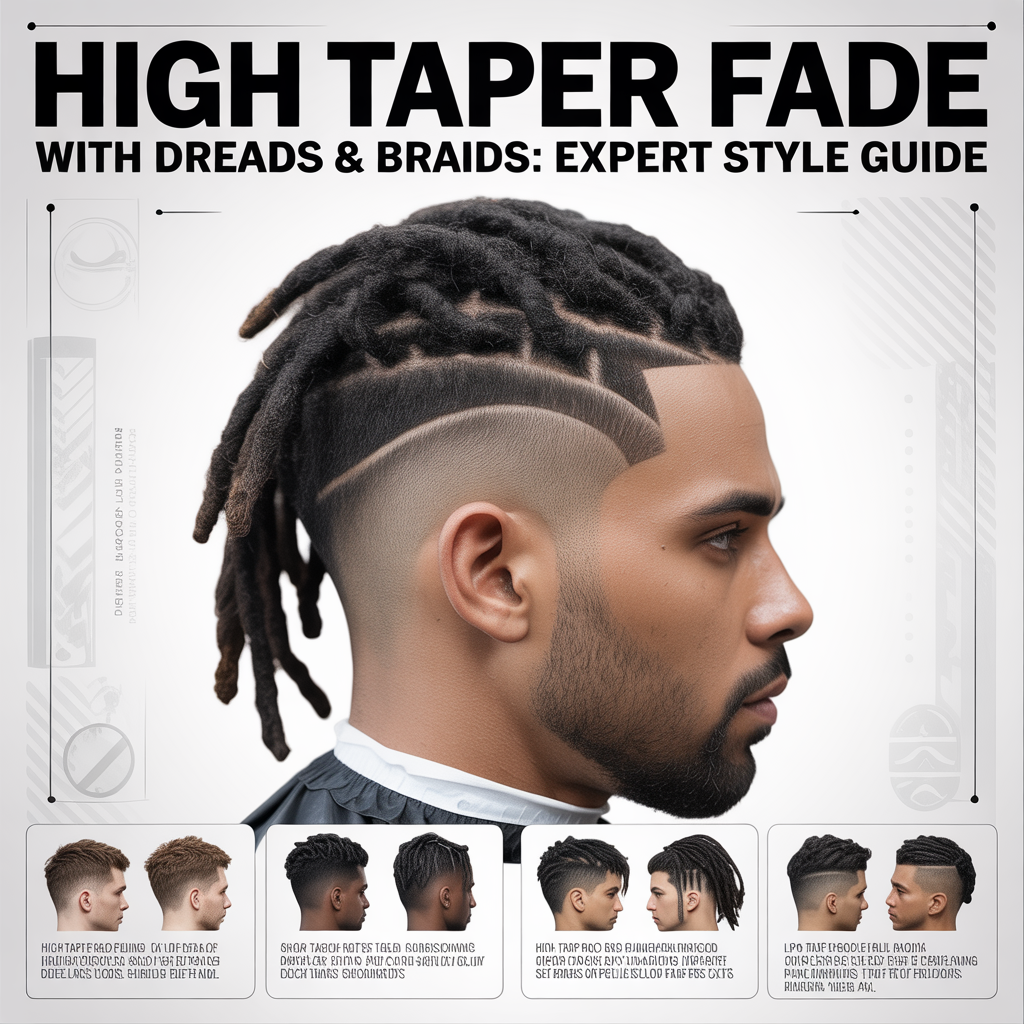
The high taper fade with dreads or braids has emerged as one of the most requested styles in modern barbershops, combining precision cutting with textured styling to create a look that’s simultaneously polished and expressive. This fusion of clean-cut professionalism and cultural authenticity represents more than just a hairstyle – it’s a statement of identity that bridges traditional barbering techniques with contemporary urban aesthetics.
What makes this combination particularly compelling is the dramatic contrast it creates. The high taper fade provides a sharp, graduated canvas that draws attention upward, whilst the dreads or braids on top add dimension, personality, and versatility. Whether you’re considering this style for the first time or looking to refine your current look, understanding the nuances of execution and maintenance can mean the difference between a haircut that simply exists and one that genuinely enhances your appearance.
Understanding the High Taper Fade Foundation

Before exploring the textured elements, it’s essential to understand what sets a high taper fade apart from other fade variations. The high taper begins its graduation well above the ears, typically around the temples or even higher, creating maximum contrast between the faded sides and the longer hair on top. This placement is particularly effective with dreads or braids because it provides substantial visual separation.
According to Marcus Williams, a master barber with fifteen years of experience specialising in textured hair: “The high taper fade works exceptionally well with dreads and braids because it eliminates bulk where you don’t need it whilst preserving length where it matters most. The key is ensuring the transition is smooth enough to complement the texture above without competing with it visually.”
The technical execution requires a barber who understands both traditional fade techniques and the specific characteristics of textured, coiled, or locked hair. The fade must account for hair density, natural curl pattern, and how the hair will behave as it grows out. This is particularly important for clients with dreads or braids, as these styles require longer-term planning than conventional cuts.
Dreads with High Taper Fade
Styles That Define Character
When pairing dreads with a high taper fade, you’re working with a style that carries cultural significance and requires thoughtful consideration. The combination offers remarkable versatility, from professional corporate environments to creative industries.
Short to Medium Length Dreads: This approach keeps dreads between two to six inches, offering easier maintenance whilst still providing styling options. The high taper creates a clean perimeter that keeps the overall look refined. This length works particularly well for those new to dreads or maintaining a more conservative appearance for professional settings.
Long Flowing Dreads: When dreads extend beyond shoulder length, the high taper fade becomes even more crucial for balance. The tight sides prevent the style from appearing overwhelming whilst allowing the length to remain the focal point. Many clients opt for this combination when they want maximum versatility—wearing dreads down for casual settings or pulled back for formal occasions.
Twisted or Free-Form Dreads: The styling method you choose for your dreads significantly impacts the overall aesthetic. Twisted dreads offer more uniform appearance and can be styled more predictably, whilst free-form dreads create organic, individualistic patterns. The high taper fade complements both approaches, though free-form dreads often benefit from the additional structure the fade provides.
James Thompson, a stylist specialising in natural hair textures, notes: “The beauty of pairing a high taper with dreads is that it allows the dreads to truly shine. You’re removing visual clutter from the sides and back, which means every loc becomes more prominent. It’s about creating hierarchy in your hairstyle—the fade is supporting cast, the dreads are the star.”
Braided Styles with High Taper Fade
Contemporary Edge
Braids offer different advantages when combined with a high taper fade, primarily in terms of versatility and the ability to change styles more frequently than dreads allow.
Cornrows with High Taper: This classic combination remains popular because it’s practical, stylish, and can last for weeks with proper maintenance. The cornrows can run straight back, curve in patterns, or create geometric designs that become more visible thanks to the clean canvas the fade provides. The high placement of the taper ensures that even as the braids age and the fade grows out, the style maintains its impact.
Box Braids with Fade: Box braids paired with a high taper create an interesting contrast between the structured sides and the free-flowing braids on top. This style works particularly well when the braids are longer, as the weight and movement of the braids create dynamic visual interest that the minimal sides enhance rather than compete with.
Braided Top Knot or Ponytail: For those wanting maximum versatility, keeping sufficient length on top for braids that can be styled up creates numerous options. The high taper fade means you can wear your braids down for a fuller look or pull them up into a top knot or ponytail for a more streamlined appearance. This combination is particularly popular among athletes and those in physically active professions.
Micro Braids and Intricate Patterns: When braiding becomes more detailed with micro braids or complex patterns, the high taper fade serves an even more important function. It provides negative space that allows the intricacy of the braiding to register visually. Without this clean perimeter, detailed braid work can become visually muddled.
The Technical Execution
What Your Barber Needs to Know
Achieving an excellent high taper fade with dreads or braids requires specific technical knowledge that goes beyond standard barbering skills. The fade must be executed with consideration for how textured hair behaves, particularly as it relates to curl pattern, hair density, and growth direction.
The blend should start high enough to create clear separation but not so high that it creates an unnatural appearance or leaves insufficient length for the textured hair to lay properly. Most skilled barbers will use multiple guard sizes, typically starting with a 0.5 or 1 at the bottom and gradually increasing to a 2 or 3 at the blend line, then carefully connecting to the longer hair on top.
For clients with existing dreads, the barber must work around the locs without disturbing them, which requires precision and experience. The fade should complement the natural direction of the dreads rather than forcing them into unnatural positions. With braids, timing matters—ideally, you want the fade fresh shortly before getting your hair braided, ensuring the cleanest possible result.
Sarah Jenkins, a barber who has trained extensively in diverse hair textures, explains: “The biggest mistake I see is barbers treating a high taper on textured hair the same way they’d approach straight hair. The growth patterns are different, the density is different, and the way the fade will grow out is different. You need to account for all of these factors during the initial cut.”
Maintenance Routines for Longevity and Health
Maintaining a high taper fade with dreads or braids requires commitment to both the cut and the textured hair above it. The fade typically needs refreshing every two to three weeks to maintain its crisp appearance, whilst dreads and braids have their own maintenance schedules.
For dreads, regular palm rolling, root maintenance, and proper washing routines are essential. The key is finding a balance—you want to keep your scalp clean and healthy without over-manipulating the dreads, which can cause breakage or thinning, particularly near the fade line where hair is more vulnerable.
With braids, the challenge is maintaining the style whilst caring for your natural hair underneath. This means regular moisturising of your scalp, careful cleansing that doesn’t disturb the braids, and knowing when it’s time to take them down. Most professionals recommend keeping braids in for no longer than six to eight weeks to prevent matting and allow your natural hair to breathe.
Between barber visits, maintaining the fade at home isn’t recommended unless you have proper equipment and training, but keeping the overall style fresh is possible through proper grooming. Use a quality oil or moisturiser specifically designed for your hair type, paying particular attention to the hairline and the transition area between the fade and longer hair.
Common Mistakes That Compromise the Style
Even with professional execution, certain mistakes can undermine the effectiveness of a high taper fade with dreads or braids. Understanding these pitfalls helps you avoid them and communicate better with your barber.
Starting the Fade Too Low: When the taper begins too low, it defeats the purpose of the “high” taper fade. The result lacks the dramatic contrast that makes this style distinctive and can make the overall look appear unbalanced, particularly with longer dreads or braids.
Neglecting Scalp Health: The combination of a tight fade and textured styling on top can stress your scalp if not properly managed. Dryness, irritation, and even follicular damage can occur when maintenance routines don’t prioritise scalp health alongside aesthetic concerns.
Inconsistent Maintenance Schedules: Perhaps the most common issue is letting the fade grow out too long between cuts. A high taper fade loses its impact quickly as hair grows, and waiting four or five weeks between appointments can mean you’re only enjoying the optimal look for half the time between visits.
Over-Manipulation of the Transition Zone: The area where the fade meets the longer hair is vulnerable to breakage, particularly with textured hair. Excessive brushing, combing, or styling of this zone can cause thinning and damage that becomes increasingly visible as the fade line moves higher.
Improper Product Usage: Using products that cause buildup near the fade line or that aren’t appropriate for your hair texture can lead to clogged follicles, reduced hair health, and a style that doesn’t hold properly. This is particularly problematic with dreads, where product buildup can affect the locking process.
Marcus Williams adds: “I’ve seen talented barbers execute perfect fades that fall apart within a week because the client didn’t understand home maintenance, or because they used products that weren’t compatible with their hair type. The consultation process before the cut is just as important as the cut itself.”
Choosing the Right Variation for Your Lifestyle
Not every version of the high taper fade with dreads or braids suits every lifestyle or face shape. Making the right choice requires honest assessment of your daily routine, professional environment, and commitment level.
For professionals in conservative industries, shorter dreads or neat cornrow patterns with a high taper offer the right balance between personal expression and workplace appropriateness. The clean lines of the fade provide a polished appearance that reads as intentional and well-groomed rather than rebellious.
Athletes and those in physically demanding professions often benefit from styles that keep hair secure and out of the way. Braided styles that can be pulled back, combined with a high taper that reduces bulk and heat retention, offer practical advantages alongside aesthetic appeal.
If you’re in creative fields or entrepreneurial ventures where self-expression is valued, longer dreads or more intricate braiding patterns with a high taper allow for maximum individuality whilst maintaining the sophistication that comes with a well-executed fade.
Face shape also matters significantly. Oval faces can accommodate nearly any variation, whilst round faces benefit from added height on top (longer dreads or braids styled upward) to create the illusion of length. Square faces work well with softer, more flowing styles that balance angular features, whilst longer faces might benefit from wider braiding patterns or dreads worn to the sides rather than pulled back.
Cultural Considerations and Respectful Styling
It’s important to acknowledge that both dreads and many braiding styles carry cultural significance, particularly within Black and African diaspora communities. For those outside these communities considering these styles, education and respect are essential.
Understanding the history, meaning, and cultural context of these hairstyles isn’t just about avoiding appropriation—it’s about wearing the style with the knowledge and respect it deserves. Many of these styles have roots in African traditions, have been used as forms of resistance and identity assertion, and continue to carry meaning beyond mere aesthetics.
For barbers and stylists, this means approaching these styles with cultural competency, understanding that you’re not just cutting hair but participating in traditions with deep historical roots. For clients, it means choosing these styles because they resonate with you personally and culturally, not simply because they’re trendy.
Sarah Jenkins reflects: “When I work with clients on these styles, particularly those who are new to dreads or traditional braiding patterns, I always take time to discuss the cultural context. It’s part of providing a complete service—you’re not just leaving with a haircut, you’re leaving with understanding.”
The Evolution of Style Over Time
One aspect often overlooked when considering a high taper fade with dreads or braids is how the style evolves as your hair grows and matures. Dreads, in particular, go through distinct stages—from the initial baby dreads through the teenage phase where they may appear fuzzy or irregular, to mature locs that have tightened and developed their final character.
The high taper fade must adapt to these changes. Early-stage dreads might benefit from a slightly lower blend line to provide support as they form, whilst mature dreads often look best with the highest possible taper that creates maximum contrast.
With braids, the evolution happens more quickly—within weeks, you’re seeing new growth at the roots and the braids themselves may begin to fuzz or loosen. Planning your fade refreshes around your braiding schedule ensures you’re maximising the time both elements look their best.
Long-term considerations also include hair health. Regular high taper fades mean repeatedly cutting the same areas, which requires ensuring those zones remain healthy. This is where quality matters in both barbering technique and home maintenance routines.
Final Thoughts: Commitment and Confidence
The high taper fade with dreads or braids represents more than a hairstyle—it’s a commitment to a particular aesthetic that requires regular maintenance, proper care, and confidence in your appearance. The rewards, however, are substantial: a distinctive look that combines precision with personality, tradition with contemporary styling, and polish with authentic self-expression.
Success with this style comes down to three elements: finding a barber who genuinely understands textured hair and advanced fading techniques, committing to the maintenance routines that keep both the fade and textured hair healthy, and wearing the style with the confidence it deserves.
The versatility built into this combination means you’re not locked into a single look. Dreads can be styled up or down, accessorised or left natural. Braids can be reconfigured into new patterns, adorned with beads or cuffs, or kept minimal. The high taper fade provides a consistent foundation that makes all these variations possible whilst maintaining a cohesive aesthetic.
For those considering this style, start with research: find barbers in your area who specialise in these techniques, look at portfolios of their work, and don’t hesitate to book consultations before committing to the cut. Understand that achieving the look you want might take time, particularly if you’re starting dreads from scratch or if your hair needs to grow to the right length for certain braiding styles.
The intersection of technical barbering skill and textured hair styling creates something special—a style that honours tradition whilst embracing modern aesthetics, that requires expertise to execute but rewards that effort with a truly distinctive appearance. Whether you’re drawn to the spiritual and cultural resonance of dreads or the geometric precision of braided patterns, pairing these elements with a high taper fade creates a style that’s both timeless and entirely contemporary.
For more comprehensive information about high taper fade variations and styling options, explore our complete guide on High Taper Fade Haircuts for Men, where you’ll find detailed breakdowns of different fade types, face shape considerations, and maintenance tips that apply across all variations of this versatile cut.
FAQs
How often should I get my high taper fade touched up with dreads or braids?
Most people need fade touch-ups every two to three weeks to maintain the crisp, clean appearance. However, if you have braids installed, you might coordinate your fade refresh with your braiding schedule—getting a fresh fade just before having your hair braided ensures both elements look their best simultaneously. With dreads, you can maintain a more flexible schedule based on personal preference and growth rate.
Can I get a high taper fade if I’m just starting my dread journey?
Absolutely. In fact, many people begin their dread journey with a high taper fade already in place. The key is working with a barber who understands how to fade around starter locs without disturbing the locking process. You might start with a slightly lower fade initially, then gradually move higher as your dreads mature and gain structure.
Will a high taper fade damage my natural hair or slow dread formation?
When executed properly by an experienced barber, a high taper fade won’t damage your natural hair or interfere with dread formation. The fade affects only the sides and back, leaving your top hair undisturbed. However, the transition area where the fade meets longer hair requires gentle handling and proper moisturising to prevent breakage at this vulnerable zone.
What’s the best length for dreads or braids when combining with a high taper fade?
There’s no single “best” length—it depends on your face shape, lifestyle, and personal preference. However, most people find that having at least four to six inches of length on top creates enough visual interest to justify the dramatic contrast of the high taper. Shorter lengths can work but may limit styling versatility, whilst longer lengths offer more options but require more maintenance commitment.
How do I maintain my scalp health with this style?
Scalp health requires consistent attention. Use a lightweight oil or moisturiser specifically designed for your hair type, applying it directly to your scalp rather than just the hair. Ensure you’re cleansing regularly without over-washing—most textured hair benefits from washing every one to two weeks. Pay particular attention to the fade line and hairline, where irritation is most likely to occur.
Can I do a high taper fade at home between barber visits?
Unless you have professional training and proper equipment, attempting to maintain your fade at home isn’t recommended. The precision required for a clean high taper, particularly on textured hair, is difficult to achieve without experience. However, you can maintain the overall cleanliness of your style through proper grooming, edge control, and keeping your hairline neat with appropriate products.
What should I tell my barber to ensure I get the style I want?
Bring reference photos of the specific look you’re after, but also be prepared to discuss how that style might need to be adapted for your hair type, face shape, and lifestyle. Mention how often you’re willing to come in for maintenance, whether you prefer a skin fade or a shadow fade at the bottom, and where exactly you want the taper to begin. Good communication before the cut prevents disappointment afterwards.
How long do braids typically last with a high taper fade?
Most braided styles last between four to eight weeks, depending on the braiding technique, your hair texture, and how well you maintain them. However, your fade will need refreshing every two to three weeks during this period. Many people get their fade touched up once or twice whilst their braids are in, then get a fresh fade and new braids simultaneously when it’s time to redo everything.
Are there face shapes that don’t work well with this style?
While the high taper fade with dreads or braids can be adapted for most face shapes, certain considerations apply. Those with very long faces might want to avoid excessive height on top, instead opting for dreads or braids worn to the sides. Round faces benefit from added height and volume on top to create the illusion of length. The key is working with your barber to customise the proportions to your specific features.
What products should I avoid using with this style?
Avoid heavy, petroleum-based products that cause buildup, particularly near the fade line where they can clog follicles and create an unclean appearance. Skip products containing harsh sulphates and alcohols that dry out your hair and scalp. With dreads especially, avoid products that leave residue inside the locs, as this can affect the locking process and create hygiene issues. Instead, opt for lightweight, water-based moisturisers and oils specifically formulated for textured hair.