
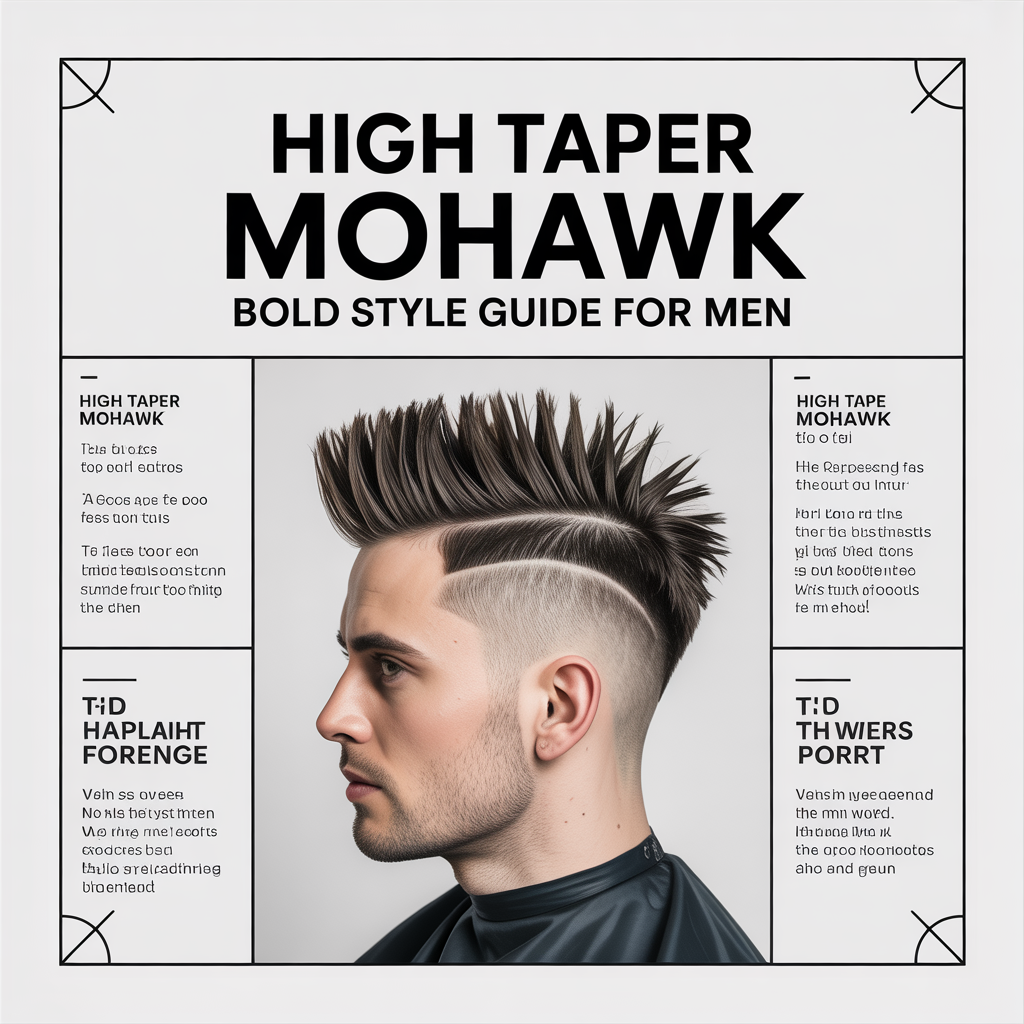
When it comes to making a bold statement with your hairstyle, few cuts command attention quite like the high taper mohawk. This striking style has evolved from its punk rock origins into a sophisticated, versatile cut that’s capturing the attention of trendsetters worldwide. Whether you’re stepping into a boardroom or a music festival, the high taper mohawk offers a perfect balance between rebellious edge and refined grooming.
Understanding the High Taper Mohawk
The high taper mohawk represents a modern evolution of traditional barbering techniques. Unlike the classic mohawk with shaved sides, this contemporary version features a gradual taper that begins high on the sides of the head, creating a smooth transition from longer hair on top to shorter hair at the temples and neckline. The result is a style that maintains the mohawk’s distinctive central strip of hair while offering a more wearable, professional appearance.
“The high taper mohawk has become one of the most requested styles in my chair over the past two years,” explains Marcus Chen, a master barber with fifteen years of experience in London’s Shoreditch district. “Clients love it because it gives them that edge without completely committing to a traditional mohawk. The taper adds sophistication that makes it appropriate for almost any setting.”
This style works exceptionally well as part of the broader high taper fade haircuts for men family, offering a more dramatic interpretation of the fade technique while maintaining the clean, modern aesthetic that defines contemporary men’s grooming.
Why the High Taper Mohawk Works
The appeal of the high taper mohawk lies in its versatility and visual impact. The elevated starting point of the taper creates maximum contrast between the top and sides, drawing the eye upward and adding perceived height. This makes it particularly flattering for men with round or square face shapes, as the vertical emphasis helps elongate facial features.
From a styling perspective, the high taper mohawk offers remarkable flexibility. The longer hair on top can be worn slicked back for formal occasions, textured and messy for casual settings, or spiked dramatically for nights out. This adaptability means you’re essentially getting multiple looks from a single cut.
The technical execution requires precision and skill. The taper must be executed with careful attention to head shape and hair growth patterns to ensure a seamless blend. “I always tell my clients that a high taper mohawk is 70% cut and 30% styling,” notes Sarah Williams, an award-winning barber from Manchester. “The foundation has to be perfect, or no amount of product will make it look right.”
Styling Your High Taper Mohawk
Achieving the perfect look with your high taper mohawk requires the right approach and products. Start with clean, towel-dried hair that’s still slightly damp. This gives you maximum control and makes styling products more effective.
For a classic mohawk spike, apply a strong-hold pomade or gel to your palms, then work it through the top section from roots to tips. Use your fingers or a comb to direct the hair upward and toward the center, creating that signature ridge. A blow dryer on medium heat can help set the style and add volume.
If you prefer a more subtle approach, a matte clay or fiber cream works beautifully for textured, piece-y looks. Simply work the product through with your fingers, lifting and separating strands for a natural, lived-in appearance. This styling method is particularly popular among men who want the mohawk aesthetic without drawing excessive attention in professional environments.
For slicked-back variations, a high-shine pomade provides both hold and that polished finish. Apply the product evenly, then use a fine-tooth comb to sweep everything back smoothly. This creates a sophisticated interpretation that references vintage styling while maintaining modern edge.
Maintenance and Upkeep
The high taper mohawk demands regular maintenance to look its best. The taper on the sides will begin to grow out after approximately two weeks, gradually reducing the contrast that makes this style so striking. Most barbers recommend scheduling appointments every two to three weeks to maintain the clean lines and sharp definition.
Between barbershop visits, keep your neckline tidy and address any stray hairs around the ears. Many men invest in quality clippers for touch-ups, though this requires a steady hand and good mirrors to avoid mishaps. If you’re not confident with clippers, it’s worth visiting your barber more frequently rather than risking an uneven result.
Daily styling is essential for this cut. Unlike lower-maintenance styles, the high taper mohawk requires deliberate effort each morning. However, most men find that once they establish a routine, styling takes no more than five to ten minutes. The investment of time pays dividends in the confident, put-together appearance this style delivers.
Product buildup can be an issue with daily styling, so use a clarifying shampoo once or twice weekly to remove residue. Follow with a lightweight conditioner to keep the hair on top healthy and manageable. Healthy hair holds styles better and looks significantly more polished than dry, damaged strands.
Variations to Consider
The beauty of the high taper mohawk lies in its adaptability. Several variations allow you to customize the look to your personal style and lifestyle requirements.
The textured high taper mohawk incorporates choppy layers and piece-y definition on top, creating a more casual, approachable vibe. This works particularly well for men with naturally wavy or thick hair, as the texture adds dimension and movement.
For those seeking maximum impact, the high skin fade mohawk takes the taper to its most extreme conclusion, fading down to bare skin on the sides. This creates dramatic contrast and requires impeccable precision from your barber. It’s a bold choice that makes an undeniable statement.
The disconnected high taper mohawk features an abrupt transition between the longer top section and the tapered sides, rather than a gradual blend. This creates distinct zones that emphasize the mohawk strip even more prominently. It’s particularly popular among younger clients and those in creative industries.
Men with curly or coily hair textures can embrace the curly high taper mohawk, which celebrates natural texture rather than fighting against it. The curls on top create organic volume and movement, while the high taper keeps everything looking intentional and well-groomed. This variation requires moisture-rich products and techniques that enhance curl definition rather than weighing hair down.
Face Shapes and Compatibility
While the high taper mohawk is remarkably versatile, certain face shapes benefit more from this style than others. Men with oval faces have the most flexibility, as this balanced face shape complements virtually any hairstyle. The vertical emphasis of the mohawk maintains proportion without overwhelming facial features.
Round faces gain significant advantages from the high taper mohawk. The vertical height created by the style adds length to the face, counterbalancing the natural roundness. Keeping some length on top—at least three to four inches—maximizes this elongating effect.
Square faces work well with this cut, though subtle adjustments can enhance the result. A slightly softer, more textured approach on top helps balance strong jawlines, while the taper creates visual interest that draws attention upward.
Men with longer, rectangular faces should approach this style thoughtfully. While it can certainly work, excessive height can further elongate the face. Consider a more moderate height on top or incorporate some width through texturizing to create better balance.
“I always assess face shape, head shape, and hair texture before committing to any version of the high taper mohawk,” explains David Thompson, a barber educator from Birmingham. “The core concept remains the same, but small adjustments in proportions and angles make the difference between a good cut and a great one.”
The Cultural Evolution
The mohawk’s journey from countercultural symbol to mainstream style statement reflects broader shifts in how society views personal expression through grooming. What once signaled rebellion and nonconformity has been reinterpreted through contemporary barbering to become accessible to a much wider audience.
This democratization hasn’t diminished the style’s impact—rather, it’s created space for individual interpretation. The high taper mohawk allows men to tap into that rebellious energy while adapting it to their personal circumstances and aesthetic preferences. It’s simultaneously edgy and refined, bold yet wearable.
The rise of social media has accelerated this evolution, with barbers sharing their work globally and clients drawing inspiration from around the world. This exchange of ideas has pushed the boundaries of what’s possible with the high taper mohawk, leading to increasingly creative interpretations and hybrid styles.
Choosing the Right Barber
Not every barber has the technical skill to execute a high taper mohawk properly. This style demands precision, an understanding of hair behavior, and experience with fading techniques. When searching for a barber, look for portfolios that demonstrate clean fades, attention to detail, and work with similar hair textures to your own.
Don’t hesitate to schedule a consultation before committing to the cut. A skilled barber will assess your hair, discuss your lifestyle and styling commitment, and provide honest feedback about whether this style suits your needs. They should explain their approach and set realistic expectations about maintenance and styling requirements.
Price shouldn’t be the primary consideration when choosing a barber for this style. A poorly executed high taper mohawk is far more expensive in the long run than paying appropriate rates for skilled work. Quality barbering is an investment in your appearance and confidence.
Making It Your Own
The most successful high taper mohawks reflect the individual wearing them. Don’t feel bound by conventional approaches—work with your barber to create a version that aligns with your personal style, professional requirements, and daily routine.
Consider incorporating design elements like subtle line work or patterns shaved into the tapered sections for added personality. These details can be as understated or dramatic as you prefer, offering another avenue for customization.
Experiment with different styling products and techniques to discover what works best for your hair type and desired look. What works for someone with fine, straight hair may not be ideal for thick, wavy textures. Give yourself permission to try various approaches until you find your signature styling method.
The high taper mohawk is more than a haircut—it’s a statement about confidence, individuality, and intentional self-presentation. Whether you’re a creative professional looking to stand out, a trendsetter who embraces bold style choices, or simply someone who appreciates exceptional grooming, this cut delivers impact and versatility in equal measure.
FAQs
How long does hair need to be for a high taper mohawk?
You’ll need at least 3-4 inches of length on top for a proper high taper mohawk, though 4-6 inches provides more styling versatility. The sides can be any length initially, as they’ll be tapered down during the cut.
How often should I get my high taper mohawk trimmed?
For optimal appearance, schedule appointments every 2-3 weeks. The taper will begin showing growth after two weeks, and maintaining sharp lines is essential to this style’s impact.
Can I have a high taper mohawk with thinning hair?
Yes, though the approach may need adjustment. A skilled barber can work with thinning hair by keeping the top section slightly shorter and using texturizing techniques to create the illusion of density. Strategic styling products also help maximize volume.
What’s the difference between a high taper mohawk and a faux hawk?
A high taper mohawk features more dramatic length and width in the central section with a higher starting point for the taper. A faux hawk is generally more subtle with a gradual taper and less pronounced central ridge, making it more conservative overall.
Is the high taper mohawk appropriate for professional environments?
This depends on your industry and workplace culture. In creative fields, it’s generally well-accepted. In more conservative environments, styling it slicked back or textured rather than spiked can make it more workplace-appropriate while maintaining the cut’s essential character.
What products work best for styling a high taper mohawk?
For spiked looks, use strong-hold pomades or gels. For textured styles, matte clays or fiber creams work well. High-shine pomades suit slicked-back variations. The best product depends on your hair type and desired finish.
Can you get a high taper mohawk with curly hair?
Absolutely. Curly hair creates beautiful, natural volume in a high taper mohawk. The key is working with your curl pattern rather than against it, using curl-enhancing products and techniques that define and moisturize.
How do I sleep without ruining my styled high taper mohawk?
Unless you’re using extremely strong-hold products, you’ll likely need to restyle each morning. Some men use a silk or satin pillowcase to minimize friction. For special occasions, sleeping with the head elevated can help preserve styling longer.
Will a high taper mohawk make my face look longer?
Yes, the vertical emphasis does create an elongating effect. This is beneficial for round or square faces but may be too much for already-long face shapes. Discuss proportions with your barber to ensure the most flattering result.
Can I transition from a high taper mohawk to another style easily?
Yes, the longer hair on top provides options. You can easily transition to a slick back, pompadour, or quiff. Growing out the sides takes 4-6 weeks to reach a length suitable for completely different styles, depending on your hair growth rate.